Have you and your partner ever talked about seeing someone together, perhaps with a wedding coming up or because things between you have felt a little strained lately, and then found yourselves getting stuck on the practicalities? Where would we go, when would we fit it in around work… and would it really be the same if we did it online from home?
Couples ask me some version of this quite often, usually in that first phone call or email, and I understand why. Many of the people who come to see me in Hove lead busy and demanding working lives, and deciding to come to counselling at all can feel like a big step without then having to work out where and how.
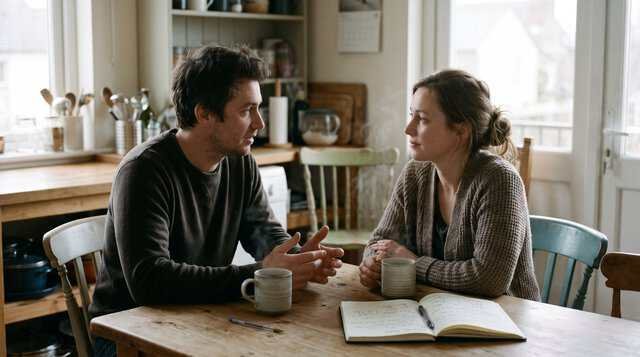
I work with couples both in person at my practice and online, and over the years I have come to think of the question in the title as two questions that have been folded together. Premarital counselling is about timing, it takes place before a couple marry and its purpose is largely to prepare. Online counselling describes the way the sessions happen, and I see couples online at every stage of a relationship, including in the months before a wedding.
Why I think preparing for marriage matters
Most of the couples I see before they marry have already been together for some years, have often lived together, and feel they know each other well. In lots of ways they do. What I tend to find is less visible are the expectations each person carries about what married life will actually be like, about money, children, work, sex, how much time is spent with whose family, and what happens if one of them becomes ill or wants to change direction. Many of these are formed early on in the families we grew up in, and they can feel so obviously “right” to the person holding them that it simply doesn’t occur to them to check whether their partner sees things the same way.
As an integrative therapist I draw on more than one approach depending on what a couple need, and with premarital work a good deal of my attention goes to how a couple argue, which often tells me more than what they are arguing about. Who goes quiet and who pushes for an answer, how quickly things escalate, and how, or whether, they find their way back to each other afterwards. These patterns tend to run automatically, long before either person is aware of them, and in my experience the earlier a couple begin to notice them the more choice they have about what happens next.
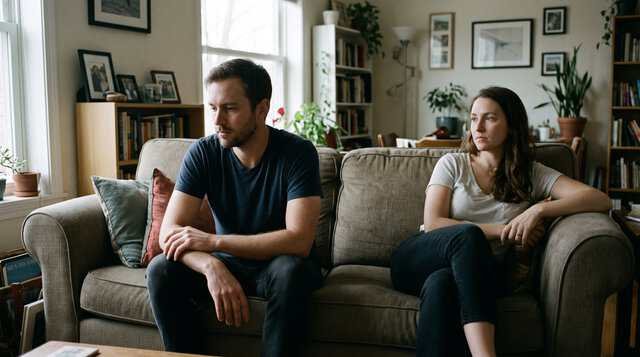
Reflect for a moment on the last time you and your partner disagreed about something, even something small….what happened just before it turned into an argument?…what did you do, or not do?…and how did you feel about yourself afterwards?
Maybe that was easier to answer than you expected, or maybe not. Most of us remember what was said far more clearly than what we were feeling just before we said it, and that is very often where the work begins.
What the research says, and what I see in practice
I think it is important to be honest about the evidence, because figures about premarital counselling are quoted rather freely online. Most of the studies come from the United States, where preparing for marriage in this way is far more common than it is here. A review of 23 studies by Carroll and Doherty in 2003 found that couples who took part in premarital programmes did noticeably better than those who didn’t, although the authors were clear that these were short-term gains and that very few studies had followed couples for long enough to know what happened years later.¹ When a later review included unpublished studies as well, the improvement in how satisfied couples felt with their relationship largely fell away, but the improvement in how they communicated held up, and it was strongest where researchers actually watched couples talking to one another.²
You may also have come across the claim that premarital counselling cuts the risk of divorce by around a third. This comes from a large American household survey led by Scott Stanley and colleagues, published in 2006, which found that couples who had some form of premarital education were less likely to divorce and described their marriages more positively.³ It is an encouraging finding, although it shows an association rather than proving cause; couples who choose to prepare for marriage may already be different in other ways.
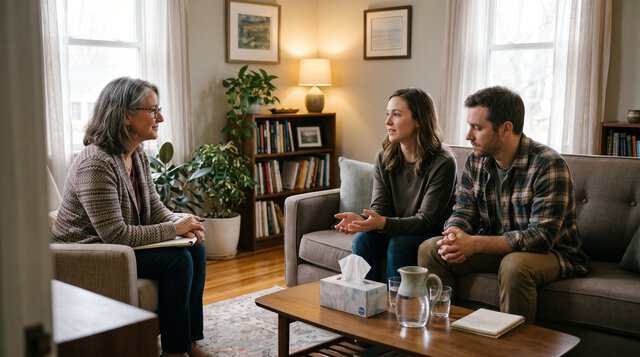
The finding about communication is the one that fits most closely with what I see in my own work. I would be wary of promising any couple that counselling will protect their marriage, but I have seen many couples leave with a much clearer understanding of how they each react under pressure, and that seems to me a good foundation to build on.
Is online counselling second best?
It is a common assumption that sitting in front of a screen can’t be as good as being in a room with a therapist, and I think some couples worry they are settling for something lesser. We know from research with individual clients that therapy by video generally reduces symptoms as well as face to face work does; one review of twelve studies found that while people rated their connection with the therapist slightly lower on screen, their outcomes were no worse.⁴ There is less research with couples, but a small Australian study published in 2022, in which 30 couples followed the same relationship programme either in person or by video, found no real difference between the two groups in how satisfied they felt with their relationship, in their mental health or in their relationship with the therapist.⁵ The programme they used is skills based and quite close to premarital work, which makes it more relevant here than it might first appear, although it is one small study.
Having worked in both ways, I notice the differences more in the practical detail than in what couples are able to achieve. On screen I see mostly faces, so some of what the body is saying, someone sitting back in their chair or going very quiet and still, can be easier to miss, and I find I need to check in a little more often about how each person is doing. The ending of a session is different too. When couples come to my practice there is the journey home afterwards, which gives them a little time before they return to the rest of the evening, whereas online the laptop closes and they are suddenly back in their own kitchen, sometimes with quite a lot still in the air. I will often leave a few minutes at the end of an online session to think with a couple about how they want to spend the hour afterwards.
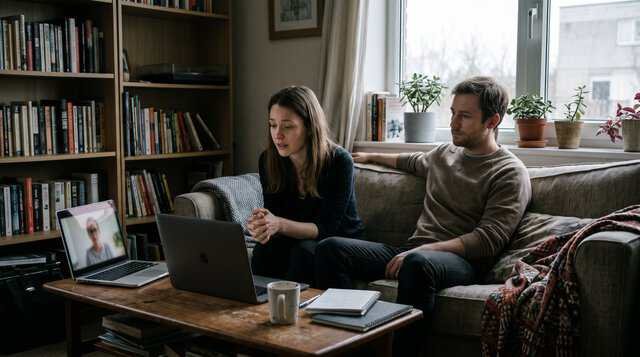
Online sessions also make it possible for some couples to do this work at all, where one partner works away for instance, or where shift patterns rarely overlap, and not having to travel can make a real difference when both people are busy and already feeling stretched. Some couples tell me they find it easier to say difficult things from their own sofa than in an unfamiliar room, which I hadn’t necessarily expected when I first began working online.
Privacy and safety at home
Before I begin working with any couple, whether in person or online, I want to get a sense of whether both people feel able to speak freely and safely. Counselling can ask a lot of people. It may mean saying things out loud for the first time, sometimes things a partner hasn’t heard before, and that is much easier to do when you aren’t half listening for footsteps on the stairs.
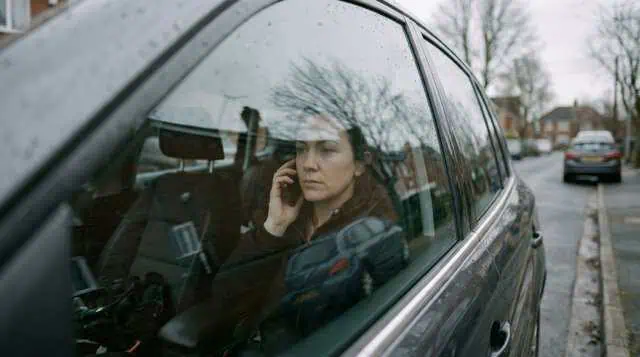
At home that isn’t always straightforward. Children may be in the next room or come in unexpectedly, and walls are often thinner than we would like them to be. Some couples find a time when the house is empty, or sit together in the car for their session. For others it simply feels more comfortable to come to my practice, where the room belongs to neither of them and what has been said there can stay there, at least for a while.
There is also a harder question, and I think it needs to be asked gently and taken seriously. In some relationships one person may not feel able to be honest, perhaps because they are afraid of how their partner will react once the session is over, or because over time they have learnt to keep the peace by staying quiet. Where there is any fear or control in a relationship, joint sessions may not be appropriate in any format, and I will usually want to speak with each person on their own first. I do this so that counselling doesn’t become another place where someone has to be careful about what they say, and so that I can think with each of you about what kind of help would be most useful.
If any of this feels close to home, it may help to talk to someone outside the relationship first. The National Domestic Abuse Helpline is free, confidential and open 24 hours a day on 0808 2000 247, and the Men’s Advice Line can be reached on 0808 8010 327. You don’t need to be certain that what is happening counts as abuse before you call.
So which works best?
Maybe the answer lies in what each of you hopes to get from the work, and which way of meeting you are both likely to commit to? In my experience, couples who come regularly and are willing to be curious about themselves, as well as about each other, tend to get a great deal from counselling wherever it takes place. Some begin online and come in for the occasional session, or the other way round, and that can work well too.
If you are choosing a counsellor, I would encourage you to check that they are registered with a professional body such as the BACP, and to ask how much of their work is with couples. If you would like to find out more about working with me, contact us to arrange an initial counselling assessment, either at the practice in Hove or online.
References
- Carroll, J. S. & Doherty, W. J. (2003). Evaluating the effectiveness of premarital prevention programs: a meta-analytic review of outcome research. Family Relations, 52(2), 105–118.
- Fawcett, E. B., Hawkins, A. J., Blanchard, V. L. & Carroll, J. S. (2010). Do premarital education programs really work? A meta-analytic study. Family Relations, 59(3), 232–239.
- Stanley, S. M., Amato, P. R., Johnson, C. A. & Markman, H. J. (2006). Premarital education, marital quality, and marital stability: findings from a large, random household survey. Journal of Family Psychology, 20(1), 117–126.
- Norwood, C., Moghaddam, N. G., Malins, S. & Sabin-Farrell, R. (2018). Working alliance and outcome effectiveness in videoconferencing psychotherapy: a systematic review and noninferiority meta-analysis. Clinical Psychology & Psychotherapy, 25(6), 797–808.
- Kysely, A., Bishop, B., Kane, R. T., McDevitt, M., De Palma, M. & Rooney, R. (2022). Couples therapy delivered through videoconferencing: effects on relationship outcomes, mental health and the therapeutic alliance. Frontiers in Psychology, 12, 773030.