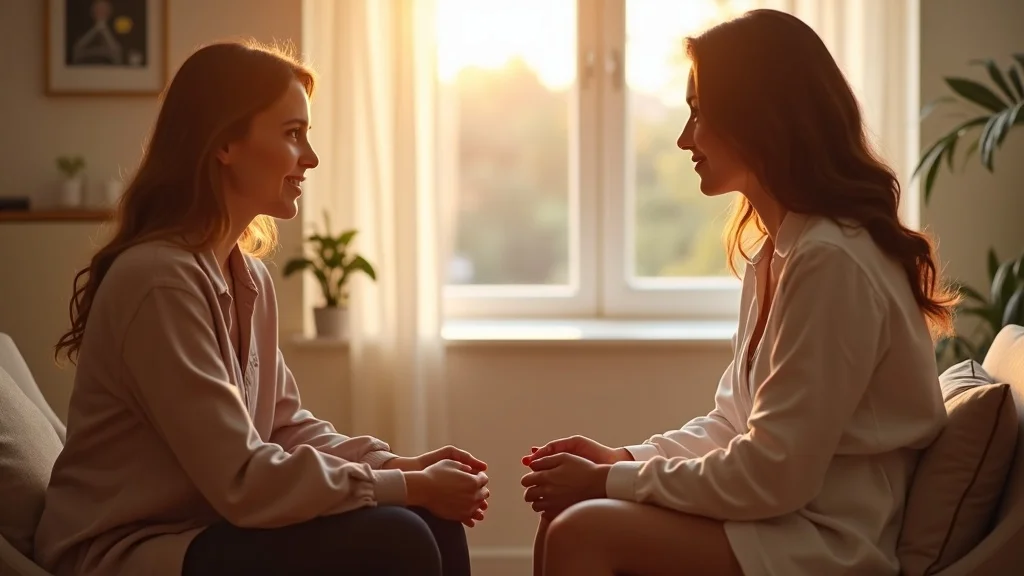
It can start quietly – the click of a door, the silence that descends before words find shape. Later, perhaps, you notice yourselves caught yet again in the same impasse, speaking lines you both know by heart, wondering how closeness can feel suddenly out of reach. For many couples, it’s not a crisis that brings them to therapy, but something subtler: repeated patterns that quietly undermine connection. If any of this is familiar, couples therapy — especially through the lens of emotionally focused therapy — may offer more than solutions; it offers a way of waking up to what is really happening between you.

Recognising Patterns: An Entry Point to Couples Therapy
Most couples do not seek support at the first sign of trouble. Frequently, it’s the slow build-up of distance or the exhausting repetition of misunderstandings that eventually signals the need for change. Couples therapy begins with recognition: patterns do not arise from nowhere. Relationship dynamics, especially those that feel immovable, often have deep roots — not in fault but in the complex interplay between two people’s fears, needs, and longing for connection.
Whether you are bracing yourself before another difficult evening or reflecting in the aftermath of yet another standoff, these moments can reveal how emotional responses become almost automatic. Couples counselling and therapy work by interrupting the belief that “this is just the way we always are”. The invitation, then, is not to assign blame, but to notice the choreography of reactions between you. Therapy may begin simply with the question: “When we get stuck, what do we both do next?” In this way, couples therapy is less prescription and more an invitation to see one another — and yourselves — differently.
Vignette: The Familiar Impasse (Client Experience)
A familiar Brighton and Hove couple, successful in their fields and used to taking charge, find themselves voiceless in their own home. Rows repeat: she raises concerns, he withdraws; he defends, she escalates. Neither intended to create this pattern, and both report feeling alone, even together. “It seems absurd,” one shares. “We’re both intelligent, but somehow we play our expected roles and the ending is always the same. ” The intellectual rigour that serves them elsewhere becomes elusive in the face of emotional overwhelm. This vignette — anonymised but recognisable — mirrors the realities many couples bring to therapy, where the aim is not to ‘fix’ one partner, but to see how the pattern keeps both locked in place.
Observing the Repetitions in Couples Counselling
As couples seek support, a couples therapist will often begin not by analysing arguments, but by gently holding up a mirror to the patterns that drive them. It can be startling to see how reliably each partner’s actions cue the next, as though following a tightly written script. Family therapy frameworks may also provide ways of thinking about how extended families, childhood roles, and enduring expectations shape present-day responses. The best way forward is not to eradicate difference, but to invite curiosity — what happens in you just before things escalate, and what happens next in your partner?
The work in couples therapy is attentive: it asks, in the smallest moments, “what is happening right now between you?” Partners are invited out of automatic reaction and into the gentle discomfort of awareness. It is in this noticing, not in the solving, that transformation resides.

What You’ll Learn About Couples Therapy and Emotionally Focused Approaches
- How couples therapy views relationship distress through a systemic lens
- The core principles of emotionally focused therapy within couples therapy
- Why emotionally focused therapy may enable transformation beyond improved communication
- What to expect from therapy sessions and the therapist’s role
- Reflecting on your own patterns in relation
The Conceptual Frame: Why Couples Seek Couples Therapy
If you have ever found yourself wondering why some conversations spiral into rows, or why certain longings remain unanswered despite best intentions, you are not alone. Couples seek therapy not because they lack love or effort, but because their usual ways of responding have reached a kind of impasse. Marriage and family therapists often see this: couples reported as “good on paper” yet suffering from a lack of emotional safety or the relentless replaying of old wounds. Couples therapy offers a structural reframing of these issues, treating relationship dissatisfaction not as an individual fault, but as the by-product of entrenched interactive patterns.
Here, the therapist does not take sides. Instead, both partners are held firmly in view. Therapy sessions become less about winning an argument and more about shifting from reaction to informed response. The distinction between automatic reactions and conscious choice is subtle but profound. Couples therapy operates on the belief that, within every couple, there is a deeper pattern shaping the story. Recognising (and then disrupting) this pattern is the task.
Moving Beyond Automatic Reactions in Relationships
Imagine the last time you felt misunderstood or dismissed by your partner. The sensation of overwhelm is rarely logical — it is sudden, bodily, and old. In moments like these, couples therapy may invite couples to notice where reaction ends and choice might begin. Over time, therapy may help partners pause: “What if I can respond differently, even as I feel the familiar urge to defend, withdraw, or criticise?” This is not wishful thinking; it is the slow cultivation of awareness in place of reflex.
Partners in couples counselling often arrive with worries about being judged. Yet, rather than focusing on individual fault, the work is to notice the system that keeps both partners constrained. Therapy offers space to name the cycle: “Whenever I raise something important, you shut down,” and then, “When you go quiet, I panic and push harder. ” The process is less about rehearsing grievances and more about learning to see the machinery at work beneath them.
The Difference Between Surface Arguments and Core Patterns
Arguments about dishes, phones at the table, or diaries are rarely about themselves. Couples therapists witness this repeatedly: the subject matters, but the underlying thread is consistent. Surface arguments serve as portals to deeper patterns — longing for reassurance, fear of abandonment, or the wish to matter.
“Our rows have a script, almost word for word. We both know our lines, and yet neither of us can find the exit.”
Recognising a pattern in couples therapy is never about minimising hurt, but about granting dignity to both partners’ experience. This work asks, not “who started it?” but “how does it happen, over and over, despite what we both want?” When therapy makes this distinction visible, there is relief in naming what has for too long felt personal as something shared.
Couples Counselling or Couples Therapy: When to Seek Which?
In Brighton and Hove, as elsewhere, the terms couples counselling and couples therapy may appear interchangeable. Yet there are distinctions. Couples counselling is often brief and focused on resolving specific issues. Couples therapy tends to be deeper, seeking to transform entrenched patterns rooted in attachment and emotional process. Therapy may be particularly suited to couples seeking lasting change or those who have discovered that communication skills training alone has not shifted the underlying impasse.
Therapists may offer both, adjusting their approach to match the couple’s needs. If repeated attempts at fixing individual issues have failed, if you find yourselves returning to the same conversations even after “practical” advice, therapy may offer a frame capable of holding more complexity — and more hope.

Core Elements of Emotionally Focused Therapy Techniques in Couples Therapy
Emotionally focused therapy (EFT) has become widely recognised as a methodology that reaches the heart of couple distress. At its core, EFT holds that adult relationships are structured around attachment needs — the longing to be safe, valued, and emotionally visible. Rather than treating conflict as a mere communication issue, EFT recognises it as a signal: under the anger and frustration, two partners are reaching for reassurance and fearing its absence.
The process is precise and structured, yet deeply human. EFT techniques help couples re-frame arguments as protests against disconnection, rather than battles to be won. Therapy sessions create space for curiosity: not, “How do I make you stop?” but, “What are we both needing, that we find so hard to ask for?” With practice, partners learn to interrupt automatic cycles, respond to each other’s rawness, and build new templates for contact. This is not about perfect harmony, but about new ways of being together – with less fear and more informed response.
Attachment Theory in Practice: Understanding the Need Behind the Reaction
The founding insight of emotionally focused therapy is that attachment needs do not disappear in adulthood. Couples therapy, through this lens, is a process of identifying the soft underbelly beneath hardened reactions: the longing to be chosen, to be believed, to have one’s inner world make sense to another person.
A couples therapist gently brings out these needs, not as weaknesses but as inherent aspects of relationship health. So, the next time one partner withdraws or lashes out, therapy encourages both to look beneath the surface. What need is trying to be expressed? Is this about the present moment — or the echo of an earlier loss or disappointment? Work done at this level does not just improve communication; it remakes the ground on which communication occurs.
Cycles and Patterns: Working with Core Interactions in Couples Seeking Change
Many couples, especially those who are bright and accomplished, are frustrated by how little awareness seems to alter a pattern once it is established. Couples therapy pays deep attention to these cycles, mapping how each person’s moves (withdrawal, attack, silence, escalation) fit together. The invitation is to shift from “Why can’t you change?” to “How do our moves create and reinforce this dance?” In emotionally focused therapy, this mapping is not shaming; it is clarifying.
Therapy sessions may include communication work, but the focus is always on the process, not just the content. By gently pausing the interaction, therapists may also highlight the split-second moment when an automatic response takes hold, inviting both partners to step back and consider a different response. This process — slow, sometimes frustrating, and often illuminating — is at the heart of transformation in couples seeking something more lasting than surface-level change.
“It’s less about finding who is right, and more about understanding why these arguments repeat.”
Developing an Informed Response: From Overwhelm to Curiosity
At its best, couples therapy is a process of waking up from automatic reactions — the bodily surge of overwhelm, the sharpness of old pain resurfaced. Partners begin to notice, with the therapist’s guidance, those moments when escalation feels inevitable. The shift therapy enables is into curiosity: “What’s happening in me now?” “What’s happening in you?” The power is not in always knowing the answer, but in the invitation to wonder (together) what else might be possible.
This movement from entrenched reactivity towards a more informed response distinguishes emotionally focused approaches from more solution-focused or skills-based methods. The work is gradual, spiralling, and honest. Progress is not measured by the absence of difficulty but by the emergence of new ways of responding—even in the heat of familiar triggers.

The Role of the Couples Therapist: Warm, Direct, and Non-Judgemental
A couples therapist is not a referee, nor a judge. The tone in couples therapy — as in the practice of marriage and family therapy — is clinical yet deeply compassionate. Warmth and directness are not at odds; in fact, both are required. Skilled couples therapists hold each partner equally, inviting honesty without shame and insight without blame.
In couples therapy sessions, both partners are seen as co-authors of the relationship’s patterns — and of its potential for change. The therapist’s role is to foster safety: an environment where even difficult truths can be named. This foundation enables not just new behaviour, but new understanding, allowing partners to move beyond reflexive roles and into more authentic encounter.
How a Couples Therapist Holds Both Partners Equally
It is not uncommon to fear that a therapist will “take sides”. In practice, holding both partners means maintaining a kind of “dual awareness” — validating the reality of each person’s experience, while never reducing the problem to individual pathology. The task is to invite both self-reflection and compassion: What is it like for you to be you, here, now, with your partner watching? What might be true for them at this moment? Couples therapy is, at heart, an exercise in shared courage.
The best way for a therapist to balance this is through attentiveness to language, tone, and moment-by-moment shifts in the dynamic. Where one partner may feel silenced, another may feel blamed; therapists may also name these experiences gently, allowing space for vulnerability and for new scripts.
What to Expect from Therapy Sessions in Couples Therapy
Therapy sessions are structured yet responsive. Couples seeking support might expect the first meeting to centre around understanding what brings them to therapy — not just what is happening, but what both are longing for. Early work in emotionally focused therapy centres on mapping the pattern; later sessions invite partners to notice, name, and eventually shift their responses in real-time.
Sessions are not lectures or assignments, but spaces for enquiry. Partners are encouraged to voice experience that might otherwise remain unsaid — to risk “I’m scared you’ll leave” where previously only anger showed. Over time, the process invites increasing intimacy, safety, and the recognition that transformation in relationship is possible, even if not linear or tidy.
Building Safety for Honest Conversation in Couples Counselling
Safety is the invisible architecture of effective couples therapy. Where shame or attack dominate, vulnerability retreats. The therapist’s role is to name — with warmth and precision — what threatens openness and what might restore it. Honest conversation is not achieved by positive thinking or wishful agreement. Rather, it is earned by sustained attention to how both partners protect themselves, and by the reassurance that even difficult feelings have a place in the room.
The “work” of couples counselling is not to force candour, but to invite it through presence, tone, and the careful holding of boundaries. Each small act of truth-telling builds a foundation; over time, partners learn that they can survive honesty — and that relationship can survive it, too.

Common Experiences: What Couples Seeking Couples Therapy Share
- Feeling ‘stuck’ in repeating disagreements
- Longing for a sense of closeness that seems just out of reach
- Worrying about whether counselling or therapy may really help
- Doubt about whether change is even possible
For many couples, the first impulse is to “try harder” — investing energy in avoiding disagreement or perfecting communication. Yet the feelings of being caught, unseen, or unchangeably distant often persist. This is where couples therapy distinguishes itself: not as a set of communication techniques, but as a place where longing, disappointment, and doubt are taken equally seriously.
Therapists are familiar with the unease that surrounds beginning this work: Will this really help? Is change – or transformation – even possible? Couples seeking support in therapy discover that the aim is not to guarantee an outcome, but to change the process by which closeness is negotiated, frustration is managed, and hope is restored or reconsidered.
Emotionally Focused Therapy in Practice: A Brief Table
| Focus | Approach |
|---|---|
| Attachment, emotional process, interaction pattern | Emotionally Focused Therapy |
| Communication skills, behaviour change | Behavioural Couple Therapy |
| Acceptance, difference, blended techniques | Integrative Couples Therapy |

Compassion with Precision: The Invitation to Self-Reflection
Self-questioning is at the heart of meaningful therapeutic work. Compassion for oneself — as well as the other — is vital, but so too is the precision of honest enquiry. Couples therapy invites a specific form of reflection: not “How can I make this better?” but, “What are my automatic responses, and what might I learn by attending to them differently?”
Transformation begins with noticing. The invitation is to pause, to watch when well-worn reactions take over, and to wonder whether there is room for something less familiar but more truthful. Precision here is not about fault-finding, but about clarity — seeing the shape of your own pattern before asking your partner to change theirs.
Noticing Automatic Responses in Your Own Relationship
Each of us has templates shaped in early relationships, influencing how we respond in moments of fear, longing, or misunderstanding. The move to withdraw, the impulse to accuse, the urge to fix: these are not random but patterned. Couples therapy creates space to identify — and gently question — these automatic responses.
Often it is easier to notice a partner’s habits than our own. Therapy may invite, “What happens in me just before I raise my voice? What do I wish you would do, and can I say it directly?” The process can be uncomfortable: self-reflection asks us to see the part we play in our own disappointments. Yet it is from precisely this point that more informed response — and transformation — can grow.
Reflective Prompt: Shifting from Blame to Curiosity in Couples Therapy
Blame and curiosity cannot occupy the same mental space. The shift from one to the other is neither sentimental nor simplistic — it is the work of rigorous self-awareness. Couples therapy invites each partner to move from accusation (“You always…” “You never…”) to genuine curiosity: “I wonder what is really happening for you?” and, equally, “I wonder why I react so strongly here?”
This invitation is not a shortcut to harmony, but a way of staying present when the impulse is to retreat or attack. Genuine dialogue is impossible without this shift. The invitation is not to be less honest, but to be more precise — and to wonder aloud how otherwise well-matched partners come to feel so far apart, and what else might be possible if the cycle were interrupted.

People Also Ask: Couples Therapy
What is the success rate of couples therapy?
Success in couples therapy cannot be summed up by a percentage. For many, it means a shift in how distress is understood and handled, even if tangible relationship outcomes vary. The truest measure is often whether partners feel a new potential for genuine connection and informed response.
What is the 5 5 5 rule in couples therapy?
The 5 5 5 rule is a conversational tool: five minutes for each partner to speak uninterrupted, then five minutes for joint discussion. While sometimes useful, emotionally focused therapy in couples therapy encourages reflection on emotional experience itself, rather than timing.
What percent of couples in couples therapy stay together?
Stay-together rates are less meaningful than what changes for couples internally. Many find transformation in their way of relating, whether or not the relationship ultimately continues.
How much will couples therapy cost?
Fees for couples therapy in Brighton and Hove vary between therapists and settings. The significance often lies in the quality of relationship with the therapist and the depth of the work, rather than a particular price point.

Frequently Asked Questions About Couples Therapy
What is emotionally focused therapy in the context of couples therapy?
Emotionally focused therapy (EFT) is an approach within couples therapy designed to help partners identify, understand, and reshape the emotional patterns that drive their interactions. Rather than simply modifying behaviour, EFT invites couples to engage more deeply with their needs for safety and connection — and to transform entrenched cycles through awareness and empathy.
Can emotionally focused therapy techniques help if trust has been broken?
While no therapy can guarantee the restoration of trust, emotionally focused techniques acknowledge the pain of betrayal without rushing to superficial repair. EFT supports couples in addressing the underlying vulnerabilities, expressing hurt, and creating new grounds for honesty. For some, this process brings new possibilities; for others, it clarifies limits. Either way, both partners are invited to participate with precision and honesty.
How do I know if couples counselling or couples therapy is right for us?
Couples counselling may suit those seeking support with a specific issue or decision. Couples therapy, particularly emotionally focused approaches, may be most appropriate if repeated patterns persist or if previous attempts to “fix” communication have not lasted. The best step is to reflect together — or separately — on what you are seeking: resolution, understanding, or transformation. A preliminary conversation with a therapist can clarify expectations and possibilities.
What’s the difference between online therapy and in-person therapy sessions for couples?
Online therapy offers convenience and accessibility, particularly for couples with demanding schedules or those living apart part of the week. In-person sessions may foster a felt sense of safety and immediacy, as non-verbal cues and subtle shifts are easier to register. What matters most is the quality of the connection with the therapist and the fit of the therapeutic process to both partners’ needs, whether online or face-to-face.
Key Insights from Couples Therapy: Shifting Patterns and Building Lasting Transformation
- Therapy may disrupt cycles and invite new forms of response
- Understanding attachment in adult relationships gives couples fresh language and hope
- Emotionally focused therapy is relevant for couples seeking meaningful and lasting change
If Something Here Feels Recognisable
Take the Next Step If something in you recognises this — even quietly — that’s enough. 👉 Start a conversation.https://thehovecounsellingpractice.co.uk/contact/
Transformation does not require certainty or bold declarations — just the willingness to wonder what else might be possible, and the courage to begin a different kind of conversation.
Sources: The Hove Counselling Practice – https://thehovecounsellingpractice. co. uk/ International Centre for Excellence in Emotionally Focused Therapy – https://emotionallyfocused. org/ British Association for Counselling and Psychotherapy – https://www. bacp. co. uk/ NCBI: Emotionally Focused Couples Therapy – https://www. ncbi. nlm. nih. gov/pmc/articles/PMC4775083/
To deepen your understanding of couples therapy and emotionally focused approaches, consider exploring the following resources: “Couples Therapy”: This Wikipedia article provides a comprehensive overview of couples therapy, including its various forms, methodologies, and research findings. (en. wikipedia. org) “Modeling Multi-Party Interaction in Couples Therapy: A Multi-Agent Simulation Approach”: This academic paper discusses innovative methods for training couples therapists using multi-agent simulations, offering insights into the complexities of couple dynamics and therapeutic interventions. (arxiv. org) These resources offer valuable perspectives on the principles and practices of couples therapy, enhancing your understanding of how emotionally focused techniques can transform relationship dynamics.