
Article-at-a-Glance: Transform Your Relationship with Weekly Mindfulness
- Establishing a “Mindfulness Monday” ritual with your partner can create a weekly reset that strengthens your connection and builds relationship resilience.
- Scientific research shows mindfulness practices improve relationship satisfaction by enhancing emotional regulation, communication skills, and empathy between partners.
- The Mindfulness-Based Relationship Enhancement (MBRE) program has demonstrated significant improvements in couple satisfaction, closeness, and acceptance of partner differences.
- Even five minutes of shared mindful breathing can reduce relationship tension and create a foundation for healthier conflict resolution.
- Couples who practice mindfulness together report feeling more present, understood, and connected, even during challenging relationship periods.
Relationships thrive on presence. In our hyper-connected yet distracted world, many couples find themselves physically together but mentally elsewhere—scrolling through phones, thinking about work, or planning tomorrow’s tasks. This divided attention gradually erodes connection, creating distance where intimacy once flourished. Mindful Couples therapy offers a powerful antidote to relationship autopilot by teaching partners to be fully present with each other, fostering deeper understanding and connection.
The concept of “Mindfulness Mondays” offers couples a structured way to reset and reconnect at the beginning of each week. By dedicating even 15-30 minutes to mindfulness practices together, partners create a sacred space that can transform relationship dynamics. This isn’t about perfecting meditation techniques—it’s about cultivating awareness, compassion, and presence with the person who matters most.
When relationship challenges arise—as they inevitably do—mindfulness provides the foundation for responding rather than reacting. Partners who practice together develop the capacity to notice their emotional triggers, pause before speaking, and approach conflicts with curiosity rather than judgment. These skills don’t just improve Monday evenings; they ripple throughout the week, creating lasting positive change.
Why Mindfulness Mondays Can Revolutionize Your Relationship
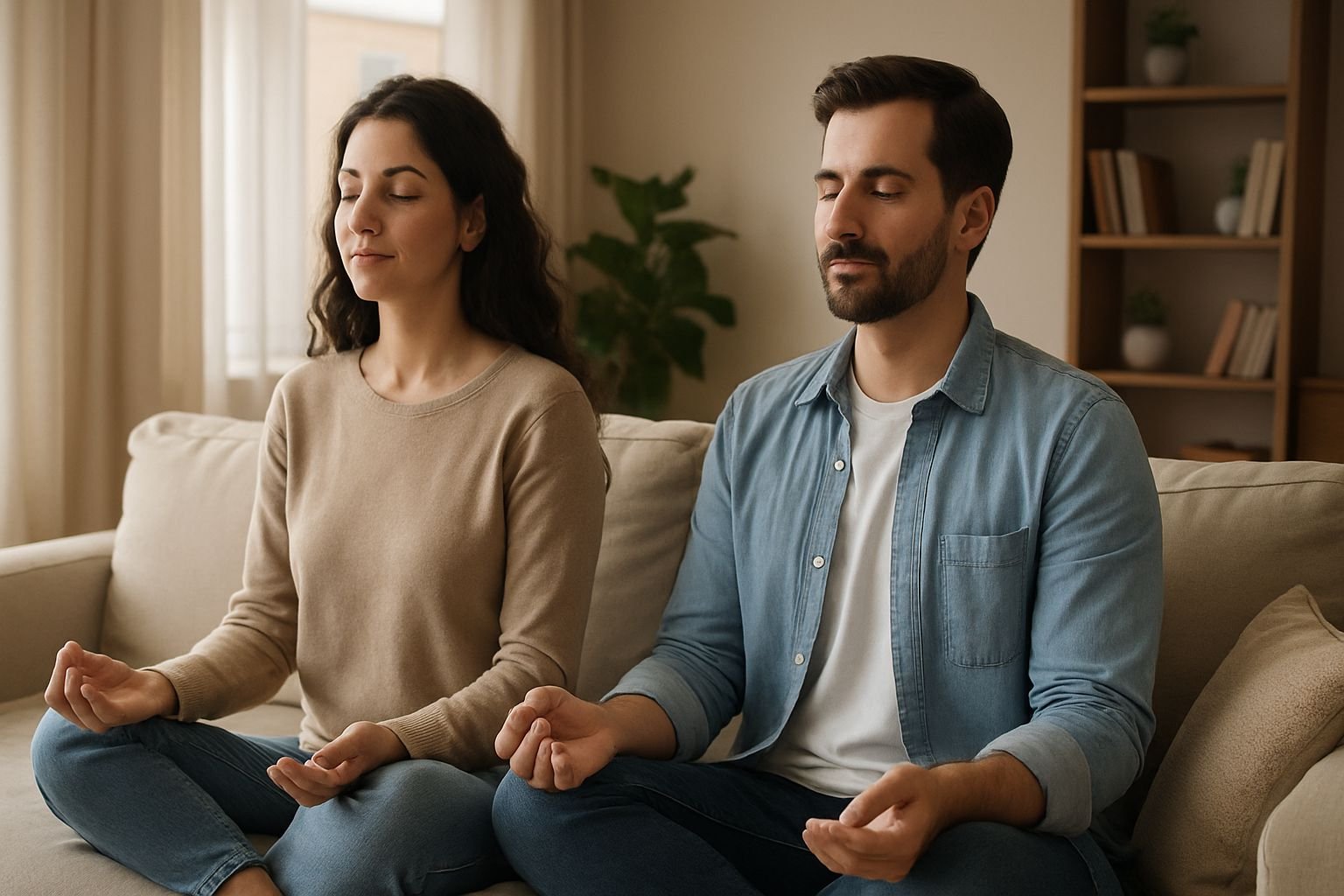
Imagine starting each week by intentionally reconnecting with your partner—not through discussing chores or schedules, but through shared presence and awareness. Mindfulness Mondays establish a weekly ritual that signals to both partners: “Our connection matters.” This regular practice creates a relationship reset button, helping couples emerge from busy weekends and transition into the workweek with greater harmony and understanding.
The power of this approach lies in its consistency. While a single meditation session might feel good momentarily, the cumulative effect of weekly practice creates neural pathways that support healthier relationship patterns. Partners begin anticipating this special time together, and the sense of connection generated during practice extends into everyday interactions. Many couples report that disagreements become less heated and reconciliations happen more quickly after establishing a regular mindfulness routine. For those interested in exploring further, understanding what Shakespeare’s famous mercy speech reveals about building stronger relationships can provide additional insights.
Beyond the immediate benefits, Mindfulness Mondays create a shared language of presence and awareness. Partners learn to recognize when the other is fully present versus distracted, and can gently invite each other back to the moment with phrases or gestures established during practice. This mutual accountability helps both individuals maintain mindfulness not just during dedicated sessions, but throughout daily interactions.
The Science Behind Mindfulness in Relationships
“Mindfulness-Based Relationship Enhancement (MBRE) participants showed significant improvements across multiple relationship measures compared to waitlist controls, with large effect sizes on relationship satisfaction, autonomy, relatedness, closeness, acceptance of partner, and relationship distress.”
— Carson et al., Journal of Marital and Family Therapy
The research on mindfulness and relationship health is compelling and growing rapidly. Studies consistently show that couples who practice mindfulness experience improvements in relationship satisfaction, communication quality, and conflict management. These benefits emerge because mindfulness enhances the fundamental capacities that support healthy relationships: emotional awareness, empathy, stress regulation, and attentive listening.
Brain imaging studies reveal that regular meditation actually changes neural structures in ways that support relationship success. The prefrontal cortex—responsible for emotional regulation and rational decision-making—shows increased activation and density in long-term meditators. Meanwhile, the amygdala—our emotional alarm system—becomes less reactive to stressors. For couples, this neurological shift translates to fewer automatic negative reactions during conflicts and greater capacity to remain present during difficult conversations.
Research on Mindfulness-Based Relationship Enhancement
The most comprehensive research on couples meditation comes from the Mindfulness-Based Relationship Enhancement (MBRE) program—an adaptation of the well-known Mindfulness-Based Stress Reduction specifically designed for couples. In a randomized controlled trial, couples who completed the 8-week MBRE program showed significant improvements in relationship satisfaction, autonomy, relatedness, closeness, and acceptance of their partners. Perhaps most impressively, these benefits weren’t just temporary—follow-up assessments showed couples maintained these improvements three months after program completion.
How Meditation Improves Communication Skills
Effective communication forms the backbone of relationship health, and mindfulness directly enhances this critical skill. When partners practice mindful listening—giving full attention without planning responses or judgments—they create the conditions for genuine understanding. Studies show that even brief mindfulness practices improve partners’ ability to accurately perceive each other’s emotions and intentions, reducing the misunderstandings that often fuel conflict.
The pausing power of mindfulness proves especially valuable during heated discussions. Partners who meditate regularly develop the capacity to notice when emotions are escalating and insert a momentary pause—sometimes just a few conscious breaths—before responding. This tiny space between trigger and reaction allows for more thoughtful communication choices rather than automatic defensive patterns. Over time, this practice creates new neural pathways that support more constructive communication, even during challenging conversations.
The Emotional Regulation Benefits for Couples
Perhaps the most significant relationship benefit of mindfulness practice is improved emotional regulation. Partners who meditate regularly show greater ability to identify and name their emotions before those feelings escalate into relationship-damaging behaviors. This emotional awareness allows for early intervention—noticing irritation before it becomes anger, or recognizing anxiety before it manifests as criticism. Couples report feeling less emotionally reactive and more capable of discussing sensitive topics without triggering negative interaction cycles.
Particularly valuable is mindfulness’s effect on relationship stress. Studies demonstrate that partners who practice together show reduced cortisol levels (a primary stress hormone) during conflict discussions compared to non-meditating couples. This physiological difference means mindful couples can maintain cognitive clarity during disagreements rather than becoming flooded with stress hormones that impair problem-solving abilities. The result is more productive discussions and faster recovery from inevitable relationship tensions.
Setting Up Your Mindfulness Monday Ritual
Creating a sustainable Mindfulness Monday practice requires thoughtful preparation. The environment, timing, and approach all influence whether this practice becomes a relationship cornerstone or just another abandoned attempt at connection. Begin by discussing with your partner what feels most supportive for both of you—mindfulness isn’t one-size-fits-all, and customizing your approach increases the likelihood of success. If you’re feeling overwhelmed by over-thinking and intrusive thoughts, seeking professional guidance can also be beneficial.
Remember that consistency matters more than duration or complexity. A simple 10-minute practice that happens reliably every Monday builds more relationship strength than an occasional hour-long session. Start small, celebrate your commitment, and gradually expand your practice as it becomes an established part of your relationship rhythm.
Creating a Dedicated Space for Practice
Your physical environment significantly impacts the quality of your mindfulness practice. Designate a specific area in your home—even if it’s just a corner of your bedroom—that feels peaceful and free from distractions. This space doesn’t need elaborate decoration, but should feel comfortable for both partners. Consider including elements that engage multiple senses: soft lighting, comfortable cushions or chairs, perhaps a gentle scent from essential oils.
Some couples find that creating a small ritual around preparing this space enhances their practice. Lighting a candle, arranging cushions together, or playing soft instrumental music can signal the transition from everyday activities to mindful connection. These small acts of preparation themselves become mindful moments that help partners shift attention from external concerns to present awareness.
Choosing the Right Time
Timing significantly influences the success of your Mindfulness Monday practice. Select a time when both partners are relatively relaxed and not rushing to another activity. For many couples, early evening works well—after work but before dinner preparations begin. Others prefer early morning before the day’s demands take over, or later evening as a transition toward restful sleep.
Whatever time you choose, protect it as you would any important appointment. Set phone reminders, mark it on shared calendars, and communicate its importance to each other. If children are part of your household, consider how to arrange care or activities that allow uninterrupted practice time—even if that means a shorter session while young ones are occupied or sleeping.
Essential Tools and Resources
While mindfulness requires no special equipment, certain resources can enhance your practice. A reliable timer prevents the distraction of checking the clock. Meditation cushions or comfortable chairs support proper posture for longer sessions. Guided meditations specifically designed for couples provide structure when you’re beginning—many are freely available through meditation apps or online platforms.
Consider creating a physical or digital “relationship mindfulness toolkit” that might include favorite guided meditations, journal prompts for reflection, or reminder cards with simple practices. Having these resources organized and accessible removes barriers to practice, especially on days when motivation might be lower.
Setting Intentions as a Couple
Begin each Mindfulness Monday by setting shared intentions. This isn’t about establishing goals to achieve but rather clarifying the qualities you wish to cultivate in your relationship. Simple intentions might include “We intend to listen with open hearts” or “We practice patience with ourselves and each other.” These statements focus attention on the process rather than outcomes and remind both partners why you’re dedicating time to this practice.
Many couples find it beneficial to verbalize these intentions to each other at the beginning of practice. This shared commitment creates accountability and connection before the formal mindfulness exercise begins. Over time, you might notice certain intentions recurring, highlighting relationship values that matter most to both of you.
5 Powerful Mindfulness Practices for Couples
The following practices form the foundation of an effective relationship mindfulness program. While each exercise stands alone, they build upon each other when practiced regularly. Begin with the practices that feel most accessible, gradually incorporating others as your comfort and capacity expand. Remember that the goal isn’t perfect execution but rather shared presence and mutual discovery.

1. Mindful Listening Exercise
Perhaps no mindfulness practice delivers more immediate relationship benefits than mindful listening. Begin by sitting face-to-face and deciding who will speak first. The speaker shares thoughts on a chosen topic for 3-5 minutes while the listener gives complete attention without interrupting, planning responses, or mentally judging what’s being said. The listener maintains eye contact, notices any urges to interrupt, and continually returns attention to the speaker’s words, facial expressions, and tone.
After the speaker finishes, the listener reflects back what they heard, focusing on understanding rather than agreement or disagreement. Partners then switch roles. Topics can range from low-stakes sharing (“What brought you joy this week?”) to more vulnerable explorations (“When do you feel most distant from me?”). The power lies not in the content but in the quality of attention exchanged—many couples report feeling truly heard for the first time through this practice.
2. Loving-Kindness Meditation for Partners
Loving-kindness meditation cultivates the emotional foundation for relationship health: goodwill, compassion, and care. Sit comfortably facing each other or side-by-side. Begin by generating feelings of kindness toward yourself, silently repeating phrases like “May I be happy, may I be healthy, may I live with ease.” After a few minutes, direct these same wishes toward your partner: “May you be happy, may you be healthy, may you live with ease.”
The final phase brings both partners into the practice with phrases like “May we be happy together, may our relationship bring joy to both of us, may we support each other through difficulties.” This meditation cultivates the emotional qualities that sustain relationships through challenges. Research shows it particularly helps partners maintain connection during conflicts and increases feelings of security within the relationship.
3. Shared Breathing Techniques
Synchronized breathing creates powerful physiological and emotional connection between partners. Sit facing each other, either holding hands or with hands resting comfortably. Begin by simply observing each other’s natural breathing for several minutes, noticing the rise and fall of shoulders and chest. Without forcing or controlling, allow your breathing rhythms to gradually synchronize. This natural entrainment creates a tangible sense of connection that many couples describe as profound.
For a deeper practice, incorporate counting: inhale together for a count of four, hold briefly, then exhale together for a count of six. This extended exhale activates the parasympathetic nervous system, reducing stress hormones and creating a shared state of calm. Partners often report that this simple practice dissolves tension that words alone couldn’t address, creating a reset button for emotional connection. For more insights on building stronger relationships, explore what Shakespeare’s famous mercy speech reveals about relationships today.
4. Mindful Touch Practice
Physical touch offers a direct pathway to present-moment awareness when approached mindfully. Begin by sitting comfortably across from each other with palms open. Take turns placing your hands on your partner’s hands, focusing complete attention on the sensations of touch—temperature, texture, pressure, and subtle movements. Practice maintaining attention on these physical sensations whenever your mind wanders to thoughts or judgments.
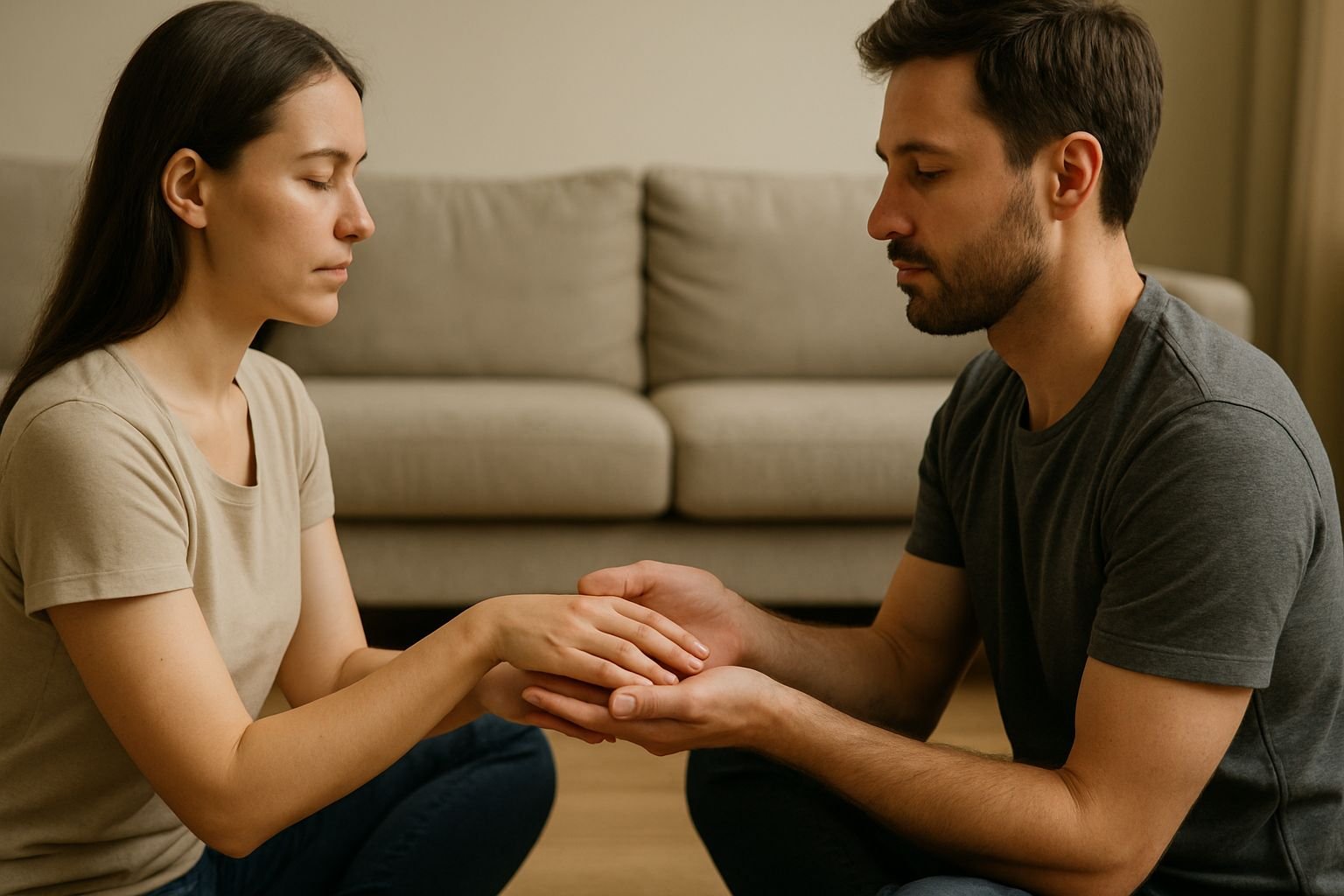
This practice can extend to other forms of non-sexual touch—a hand on a shoulder, palms resting on each other’s hearts, or gentle face touching. The key element is bringing full awareness to the giving and receiving of touch rather than touching automatically or while distracted. Many couples report that mindful touch restores intimacy that has diminished through routine physical contact, reawakening the connection that was present early in their relationship.
5. Gratitude Meditation for Relationship Appreciation
Gratitude practice counteracts the human tendency to focus on relationship problems while taking positive aspects for granted. Begin by sitting quietly together for a few minutes, centering attention on the breath. Then take turns sharing three specific things you appreciate about your partner or your relationship from the past week. These should be detailed rather than generic—not “I appreciate your kindness” but “I felt really seen when you remembered to bring home my favorite dessert after my difficult workday.”
The listening partner practices receiving appreciation without deflecting or minimizing it—simply saying “thank you” rather than explaining or diminishing the action being recognized. This exchange creates a positive feedback loop of noticing and expressing appreciation, gradually retraining attention toward relationship strengths rather than deficits. Couples who practice regularly report a significant shift in their daily awareness of positive partner behaviors.
Overcoming Common Obstacles to Couple’s Mindfulness
Even with the best intentions, obstacles inevitably arise when establishing a mindfulness practice together. Rather than seeing these challenges as failures, approach them as opportunities to deepen your commitment and creativity. The way you navigate difficulties in your practice often mirrors how you handle relationship challenges more broadly—making the process itself a valuable learning experience.
Most couples encounter similar hurdles when beginning mindfulness practices together. Addressing these common challenges proactively increases your chances of creating a sustainable practice that truly strengthens your relationship over time.
When One Partner Is Resistant
Asymmetrical enthusiasm is perhaps the most common challenge couples face when beginning mindfulness practices. If your partner seems reluctant, resist the urge to pressure or convince. Instead, approach the situation with curiosity and compassion. Ask open-ended questions about their concerns, and listen without defensiveness. Their hesitation might stem from misconceptions about mindfulness, previous negative experiences with meditation, or simply feeling vulnerable about trying something new together.

Consider starting with more accessible practices that don’t feel overtly “spiritual” or unfamiliar. Brief check-ins, shared breathing for just two minutes, or simply sitting quietly while holding hands can introduce mindfulness concepts without triggering resistance. Emphasize the relationship benefits rather than meditation as an end in itself, framing the practice as “us time” rather than a spiritual or self-improvement exercise.
Remember that consistency from one partner often eventually inspires the other. Many initially reluctant partners become enthusiastic practitioners after witnessing positive changes in their relationship and in their partner’s individual well-being. Patience and non-judgment create space for gradual engagement rather than forced participation.
Finding Time in Busy Schedules
Time constraints represent another significant barrier to consistent practice. Between work demands, household responsibilities, childcare, and social commitments, finding even 20 minutes for uninterrupted practice can feel impossible. Address this challenge by starting with ultra-short practices—even five minutes of mindful connection creates benefits and establishes the habit of prioritizing your relationship.
Look for creative ways to integrate mindfulness into existing routines rather than viewing it as another obligation to squeeze into crowded schedules. A mindful morning coffee ritual, intentional greeting and farewell practices, or five minutes of shared breathing before sleep require no additional time blocks. These “mindfulness anchors” throughout the day often prove more sustainable than longer, formal sessions that feel logistically challenging.
Maintaining Consistency When Life Gets Hectic
Life inevitably throws disruptions into even the most committed practice schedules. Work crises, illness, travel, or family emergencies can derail your Mindfulness Monday routine. When these interruptions occur, treat them as normal rather than as practice failures. The mindful response involves acknowledging the disruption without judgment and gently recommitting to your practice when circumstances allow. For couples facing additional challenges, exploring ADHD couples therapy can offer strategies to maintain consistency and understanding in relationships.
Create simple contingency plans for busy periods—perhaps a three-minute connection practice instead of your usual twenty minutes, or a midweek makeup session if Monday becomes impossible. The flexibility you bring to maintaining your practice despite obstacles builds resilience that transfers to other relationship challenges. Partners often report that learning to adapt their mindfulness practice together strengthens their ability to navigate life’s unpredictability as a team.
Extending Mindfulness Beyond Monday: Daily Practices
While your Monday practice creates a strong foundation, the real relationship transformation happens when mindfulness principles extend into daily interactions. Small, intentional moments of presence throughout the week reinforce and amplify the benefits of your formal practice. These “mindfulness microdoses” require minimal time but offer substantial relationship returns when practiced consistently.
Consider these daily mindfulness extensions as relationship vitamins—small, potent practices that nourish connection even on the busiest days. The cumulative effect of these brief moments often exceeds the impact of longer but isolated formal practices.
Morning Connection Rituals
How partners greet each other in the morning sets the emotional tone for the day. Create a brief morning mindfulness ritual—perhaps just 60 seconds—that establishes connection before daily demands take over. This might involve making eye contact while sharing one intention for the day, a 30-second embrace with synchronized breathing, or simply holding hands for a moment before leaving the bedroom.
Many couples find that a consistent morning connection practice prevents the disconnection that often accumulates throughout busy days. When you begin with presence, you’re more likely to return to that state during brief interactions throughout the day. This foundation of morning connection creates a relationship buffer against stress and external pressures. For more insights on strengthening relationships, explore building stronger relationships today.
Mindful Communication Throughout the Week
Apply the principles from your listening practice to everyday conversations. When your partner speaks, practice giving complete attention rather than half-listening while mentally preparing your response or glancing at devices. This quality of attention transforms routine exchanges into moments of genuine connection. Partners often report feeling more valued and understood when they experience the difference between distracted and mindful listening.
Create a simple signal that either partner can use to request mindful attention for an important communication. This might be a hand gesture, a specific phrase like “I’d like your full presence for this,” or even placing a designated object (like a small stone) between you. This signal helps both partners transition from automatic communication to mindful exchange, particularly during important or sensitive conversations.
Micro-Mindfulness Moments During Conflict
Perhaps the most powerful application of relationship mindfulness comes during disagreements. When tensions rise, practice inserting a brief pause—even three conscious breaths—before responding to your partner. This tiny space allows you to notice physical sensations, identify emotions accurately, and choose a response rather than react automatically. Many couples find that this simple practice prevents escalation and helps maintain connection even during disagreements.
Remember that the goal isn’t to eliminate conflict but to engage with it mindfully. Practice naming your emotions aloud (“I notice I’m feeling frustrated”) rather than acting from them unconsciously. This transparent naming often defuses tension and invites your partner into understanding rather than defensiveness. The capacity to remain present during difficult emotions represents one of mindfulness’s greatest gifts to relationship health.
Real Relationship Transformations Through Mindfulness

The impact of consistent mindfulness practice extends far beyond momentary calm or connection. Couples who maintain these practices report fundamental shifts in their relationship dynamics—changes that persist even during challenging periods. These transformations emerge gradually through consistent practice rather than as immediate breakthroughs, building relationship resilience from the inside out.
Conflict Resolution Improvements
Perhaps the most noticeable change occurs in how couples navigate disagreements. After establishing regular mindfulness practices, partners typically report increased capacity to recognize escalation patterns before they become destructive. The pause between trigger and reaction grows longer, creating space for thoughtful responses rather than automatic defensiveness. Mindful couples more easily maintain perspective during conflicts, viewing disagreements as problems to solve together rather than threats to the relationship.
Communication during conflicts also transforms through mindfulness practice. Partners become more skilled at expressing feelings without blame (“I feel worried when…” rather than “You always make me worry”) and listening without immediately planning defenses. This improved communication leads to faster resolution and less residual tension after disagreements, preventing the accumulation of resentment that damages many relationships.
Perhaps most importantly, mindfulness helps couples recover more quickly after conflicts. The practice of returning attention to the present moment—rather than replaying arguments or ruminating on hurts—allows partners to reconnect more readily after disagreements. This resilience prevents the emotional distance that often follows unresolved conflicts, maintaining the relationship’s foundation even through challenging periods.
Deepened Intimacy and Connection
Beyond conflict improvements, couples consistently report a profound deepening of intimacy through mindfulness practice. The quality of presence partners bring to each other creates a sense of being truly seen and valued that many describe as transformative. This emotional intimacy often enhances physical connection as well, as partners bring greater awareness and presence to physical touch both within and outside sexual encounters.
Mindfulness practices also strengthen empathy between partners. Regular meditation enhances the capacity to perceive subtle emotional cues and respond compassionately to a partner’s needs. Many couples report feeling more attuned to each other’s emotional states, sometimes noticing when their partner needs support even before it’s verbalized. This deepened understanding creates a powerful sense of being known and understood that sustains relationships through inevitable challenges.
Building Resilience as a Couple
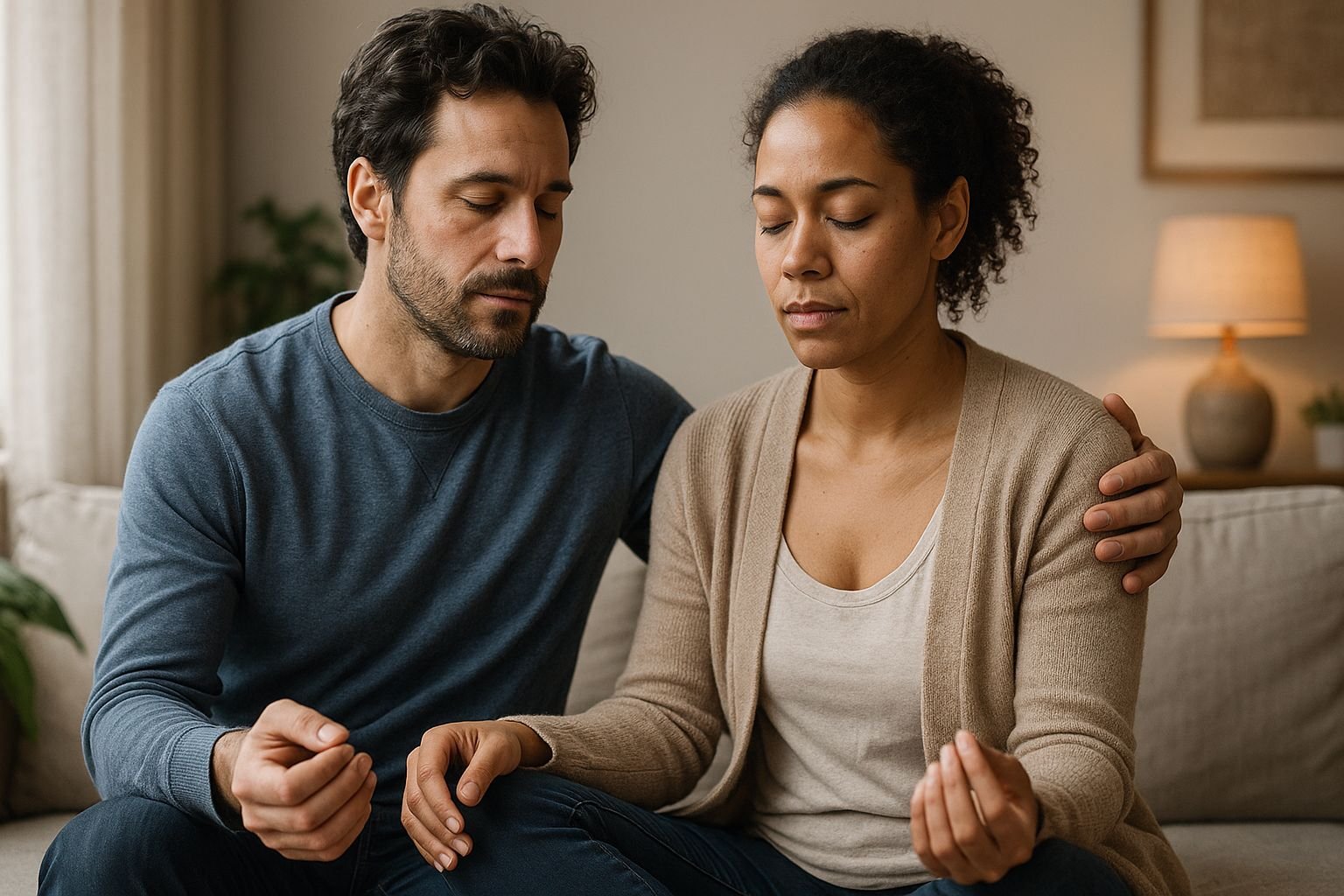
The cumulative effect of consistent mindfulness practice is relationship resilience—the capacity to maintain connection and recover balance through life’s inevitable difficulties. Partners who practice together develop a shared language of presence and awareness that helps them navigate stressors as a united team rather than as adversaries. This resilience becomes particularly valuable during major life transitions like career changes, parenting challenges, health issues, or family crises.
A 4-Week Mindfulness Monday Program to Get Started
The following structured program provides a simple but powerful introduction to couple’s mindfulness. Each week builds on previous practices while introducing new elements that deepen your experience together. Adapt the timing and specific practices to suit your relationship’s unique needs and circumstances, while maintaining the progressive structure that builds skills gradually.
Remember that perfection isn’t the goal—consistency and shared intention matter far more than flawless execution. Approach each practice with curiosity rather than judgment, viewing challenges as opportunities to deepen your understanding together.
Week 1: Foundation Building
Begin your journey with practices that establish basic mindfulness skills while creating a container of safety and connection. Start with a 5-minute silent meditation sitting face-to-face or side-by-side, simply noticing breath sensations and returning attention whenever your mind wanders. Follow this with a 10-minute mindful listening exchange, each partner taking 5 minutes to share “what’s alive in me right now” while the other listens without interruption or planning responses.
Close your first session by setting shared intentions for your mindfulness journey—what qualities you hope to cultivate together and how you’ll support each other through the learning process. Record these intentions somewhere visible as a reminder throughout the week. Between sessions, practice a 60-second connection ritual each morning and evening, perhaps holding hands while taking three conscious breaths together.
Week 2: Communication Focus
Build on your foundation by expanding the mindful listening practice. Begin with a 5-minute silent meditation as in week one, then move to a deeper listening exchange focused on a meaningful topic like “a time I felt especially connected to you” or “something I appreciate about our relationship that I don’t express enough.” Extend the listening time to 7 minutes per partner, with the listener practicing reflecting back what they heard before partners switch roles.
Introduce a new element of noticing physical sensations that arise during communication—tension, warmth, openness, constriction—without judging these sensations as good or bad. This body awareness during communication helps both partners recognize emotional reactions before they escalate into reactive patterns. Between sessions, practice the STOP technique (Stop, Take a breath, Observe sensations/emotions, Proceed) once daily during regular conversations.
Week 3: Emotional Intimacy
Deepen your practice by introducing loving-kindness meditation focused specifically on your relationship. After your opening silent meditation, practice 10 minutes of sending good wishes first to yourself, then to your partner, and finally to your relationship as a whole. Follow this with a vulnerability exchange where each partner shares something they find challenging in the relationship while practicing non-reactive listening and compassionate responses.
Week 4: Gratitude and Appreciation
In your final structured week, focus on cultivating gratitude as a cornerstone of relationship mindfulness. Begin with your established opening meditation, then practice a gratitude exchange where each partner shares three specific appreciations about the other, being as detailed as possible about both actions and qualities you value. The listening partner practices fully receiving this appreciation without deflecting or minimizing it.
Conclude your four-week program with a reflection on your journey—what you’ve noticed changing in your relationship, challenges you’ve encountered, and how you want to continue your practice. Create a sustainable plan for ongoing Mindfulness Mondays that feels realistic given your lifestyle and commitments. Many couples find that alternating between their favorite practices from the four-week program provides an ideal foundation for continued growth.
Your Path Forward: Making Mindfulness a Relationship Cornerstone
As you continue beyond the structured four-week program, approach your mindfulness practice as an evolving journey rather than a fixed destination. The practices that serve your relationship will change as your circumstances and relationship evolve. Regular check-ins about what’s working and what needs adjustment help keep your practice fresh and relevant. Consider periodically introducing new elements—perhaps from books, apps, or workshops—while maintaining the core practices that most benefit your specific relationship.

Frequently Asked Questions
Couples beginning mindfulness practices together typically share common questions and concerns. The following responses address these frequent inquiries based on both research evidence and practical experience from couples who have successfully incorporated mindfulness into their relationships.
How long should our Mindfulness Monday sessions last?
Quality matters more than duration, especially when beginning. Many couples find that 15-20 minutes provides enough time for meaningful practice without feeling overwhelming. As your comfort and capacity increase, you might naturally extend to 30-45 minutes. Consistency with shorter practices yields better results than occasional longer sessions, so choose a duration that feels sustainable within your schedule and lifestyle.
Can mindfulness really help if we’re already having relationship problems?
Research shows mindfulness can indeed benefit distressed relationships, though the approach differs slightly. If you’re experiencing significant conflict or disconnection, begin with very brief practices focused on individual regulation rather than immediately diving into vulnerable exchanges. Simple shared breathing or brief meditations help establish the emotional safety necessary for addressing relationship challenges.
For relationships with established negative patterns, mindfulness works best as a complement to rather than replacement for couples therapy. Many therapists now incorporate mindfulness techniques into their approach, creating a powerful combination of guided skill-building and independent practice. The self-awareness developed through mindfulness often accelerates therapeutic progress by helping partners recognize and interrupt problematic patterns.
What if I fall asleep during meditation practices?
Sleepiness during meditation is extremely common, especially for beginners or when practicing in comfortable positions. If you notice yourself drifting off, try simple adjustments like sitting in a more upright position, opening your eyes halfway, practicing earlier in the day, or choosing more interactive exercises like mindful conversation rather than silent meditation. Remember that sleepiness itself can become an object of mindful attention—noticing it with curiosity rather than judgment often reveals useful information about your energy levels and self-care needs.
Do we need any special training to start mindfulness practices together?
No special training is required to begin basic mindfulness practices as a couple. The exercises described in this article provide an accessible starting point requiring no previous experience. As your practice develops, you might choose to expand your skills through books, apps with specific couple’s meditations, online courses, or relationship mindfulness workshops. Many couples find that even a single session with a mindfulness teacher or relationship coach helps refine their technique and address specific challenges.
How soon might we notice positive changes in our relationship?
Most couples report subtle shifts after just 2-3 weeks of consistent practice—often noticing improved listening quality, decreased reactivity during minor disagreements, or greater awareness of automatic patterns. More substantial changes typically emerge after 8-12 weeks, particularly in how couples navigate conflicts and recover from disconnection. The most profound transformations develop gradually over months of practice as new neural pathways and relationship habits become established. Patience and consistency yield far greater benefits than seeking immediate dramatic results.
“The quality of our relationships determines, to a large extent, the quality of our lives. Mindfulness doesn’t just change how we relate to ourselves—it transforms how we connect with those we love most.”
Remember that relationship mindfulness is less about perfecting specific techniques and more about cultivating a quality of presence with your partner. The practices themselves matter less than the intention behind them—the commitment to showing up fully for each other, moment by moment. Even on days when formal practice feels challenging, this underlying intention continues strengthening your connection.
Mindfulness offers couples a powerful alternative to relationship autopilot—a way of being together that honors both the joy and challenge of sharing life with another person. Through consistent practice, partners discover that the present moment contains everything needed for connection, understanding, and love. The journey begins with a single mindful Monday and unfolds into a lifetime of deeper relating.
For additional support on your mindfulness journey, consider exploring the many excellent resources available through Mindful Couples therapy. Their specialized approach combines traditional relationship counseling with evidence-based mindfulness practices, providing couples with comprehensive tools for lasting connection.