
Key Takeaways
- Ancient Roman relationship philosophy centered on three core virtues: gravitas (depth), pietas (loyalty), and dignitas (respect) – principles that modern research confirms are essential for relationship success.
- Romans practiced deliberate communication techniques like active listening and cooling periods during disagreements, approaches validated by contemporary relationship counselors.
- The Roman concept of “otium” (quality leisure time) played a crucial role in relationship balance, reminding modern couples about the importance of intentional togetherness.
- Stoic wisdom offers powerful tools for couples facing challenges, focusing on controlling responses rather than circumstances.
- While gender roles have evolved dramatically since Roman times, their emphasis on character development and virtue as foundations for partnership remains surprisingly relevant.
Looking to ancient Rome for relationship advice might seem unusual at first glance. After all, weren’t they the civilization famous for imperial conquests and gladiatorial combat? Yet beneath the popular images lies a sophisticated understanding of human connection that transcends time. At Timeless Love Academy, we’ve discovered that many relationship principles considered cutting-edge today were actually practiced thousands of years ago in Roman society.
Roman philosophers like Cicero, Seneca, and Marcus Aurelius devoted considerable attention to understanding the nature of human relationships. Their insights weren’t limited to political alliances or social connections—they extended deeply into the realm of intimate partnerships. What makes their wisdom particularly valuable is how it focuses on character development rather than quick fixes or manipulation techniques.
While we certainly shouldn’t idealize Roman society, which had significant flaws including deeply unequal gender dynamics, we can extract timeless principles that align with modern relationship science. The Romans understood that lasting connections require more than passion or convenience—they demand virtue, intentionality, and mutual growth.
Article-at-a-Glance
This exploration of ancient Roman relationship wisdom reveals surprising parallels with contemporary relationship psychology. From communication techniques that resolve conflict to philosophical approaches that weather life’s challenges, Rome’s greatest thinkers offer insights that remain relevant across millennia. By examining these principles through a modern lens, we can apply timeless wisdom to today’s relationship challenges while leaving behind the problematic aspects of Roman society.
What follows isn’t simply historical curiosity—it’s practical wisdom backed by both ancient experience and modern research. The Romans may have lived in a different world, but their understanding of human connection offers valuable guidance for navigating our own relationship journeys.
Timeless Roman Love Lessons That Still Work Today
The foundation of Roman relationship philosophy rested on what we might call “character-centered love.” Unlike our often emotion-focused approach to relationships, Romans believed that virtue and character development formed the true basis for lasting connection. This perspective aligns remarkably well with contemporary research showing that admiration and respect for a partner’s character traits strongly predict relationship longevity.
Seneca, one of Rome’s most influential Stoic philosophers, wrote extensively about the importance of choosing partners based on moral qualities rather than superficial attributes: “Choose as a companion one whom you admire for their character, not their appearance.” This advice echoes modern relationship studies demonstrating that attractions based primarily on physical appearance or external qualities tend to diminish over time, while connections rooted in character appreciation deepen.
Perhaps most surprisingly, Roman thinkers emphasized the importance of friendship within romantic relationships. Cicero’s treatise “On Friendship” (De Amicitia) outlines principles that apply remarkably well to modern marriages and partnerships. He writes that true friendship—and by extension, intimate partnership—”can only exist between good people.” This focus on goodness of character as the foundation for connection offers a refreshing alternative to the often transactional view of relationships prevalent today.
The 3 Roman Virtues That Create Unbreakable Bonds
Roman philosophers identified three core virtues that formed the foundation of strong relationships: gravitas (depth/seriousness), pietas (loyalty/duty), and dignitas (dignity/respect). These weren’t merely abstract concepts but practical qualities to be cultivated daily. Modern relationship research consistently confirms that these same principles—though we may use different terminology—remain essential for relationship success today.
What makes these virtues particularly valuable is their focus on character development rather than technique. Unlike many modern relationship strategies that emphasize what to do or say in specific situations, Roman wisdom centers on who to become. This inside-out approach creates authentic connection rather than simply managing interactions.
The beauty of these virtues lies in their mutual reinforcement. As partners develop greater depth in their character (gravitas), they naturally inspire greater loyalty (pietas). As they demonstrate consistent loyalty, they build mutual respect (dignitas). This virtuous cycle creates relationships that don’t just survive challenges but actually strengthen through them.
Gravitas: Building Relationship Depth Beyond Surface Attraction
Gravitas—often translated as “seriousness” or “depth of character”—was highly prized in Roman society. In relationships, it manifested as the ability to move beyond surface-level attraction to deeper connection. Romans understood that while initial chemistry might spark attraction, only substantive character could sustain it. This principle aligns perfectly with modern research showing that relationships based solely on physical attraction or shared activities frequently falter when facing significant life challenges.
Pietas: How Loyalty Transforms Modern Partnerships
Pietas represented one of Rome’s highest virtues—a sense of duty, loyalty, and devotion extending beyond mere contractual obligation. In relationships, pietas manifested as faithful commitment even when circumstances became difficult. Unlike modern concepts of loyalty that sometimes focus primarily on sexual fidelity, Roman pietas encompassed a broader commitment to a partner’s wellbeing and growth.
This virtue particularly shone during challenging times. Seneca wrote extensively about maintaining pietas during a partner’s illness or misfortune—showing that true connection reveals itself not in good times but in adversity. Modern couples can apply this wisdom by viewing loyalty as an active virtue requiring daily choices rather than a passive state.
Interestingly, Romans didn’t view pietas as limiting individual freedom but rather as the foundation that made authentic freedom possible. By maintaining trustworthy commitments, partners created the security needed for genuine vulnerability and self-expression—a paradox that modern relationship psychology continues to confirm.
“The foundation of justice is good faith—meaning constancy and truth in words and agreements.”
— CiceroFor those interested in exploring how these principles apply to modern relationships, consider reading about building stronger relationships today.
Dignitas: Mutual Respect as the Foundation of Lasting Love
Dignitas extended beyond our modern concept of dignity to encompass worthiness, prestige, and respect. In relationships, it manifested as treating one’s partner with profound respect regardless of circumstance. This respect wasn’t contingent on agreement or convenience but represented a consistent acknowledgment of inherent worth.
Roman philosophers advocated maintaining dignitas even during disagreements—never resorting to insults, contempt, or disrespect even when expressing different perspectives. This aligns remarkably with Dr. John Gottman’s modern research identifying contempt as the single greatest predictor of relationship failure. The Roman emphasis on preserving a partner’s dignitas, even during conflict, offers a powerful antidote to this relationship killer.
Roman Communication Secrets for Better Understanding
Roman society placed enormous value on eloquence and effective communication. While we often associate Roman oratory with politics and public forums, these same principles were applied within intimate relationships. Elite Romans understood that relationship communication required intention, skill, and practice—not just spontaneous expression of feelings. This deliberate approach to communication parallels modern relationship research showing that effective communication patterns can be learned and developed over time.
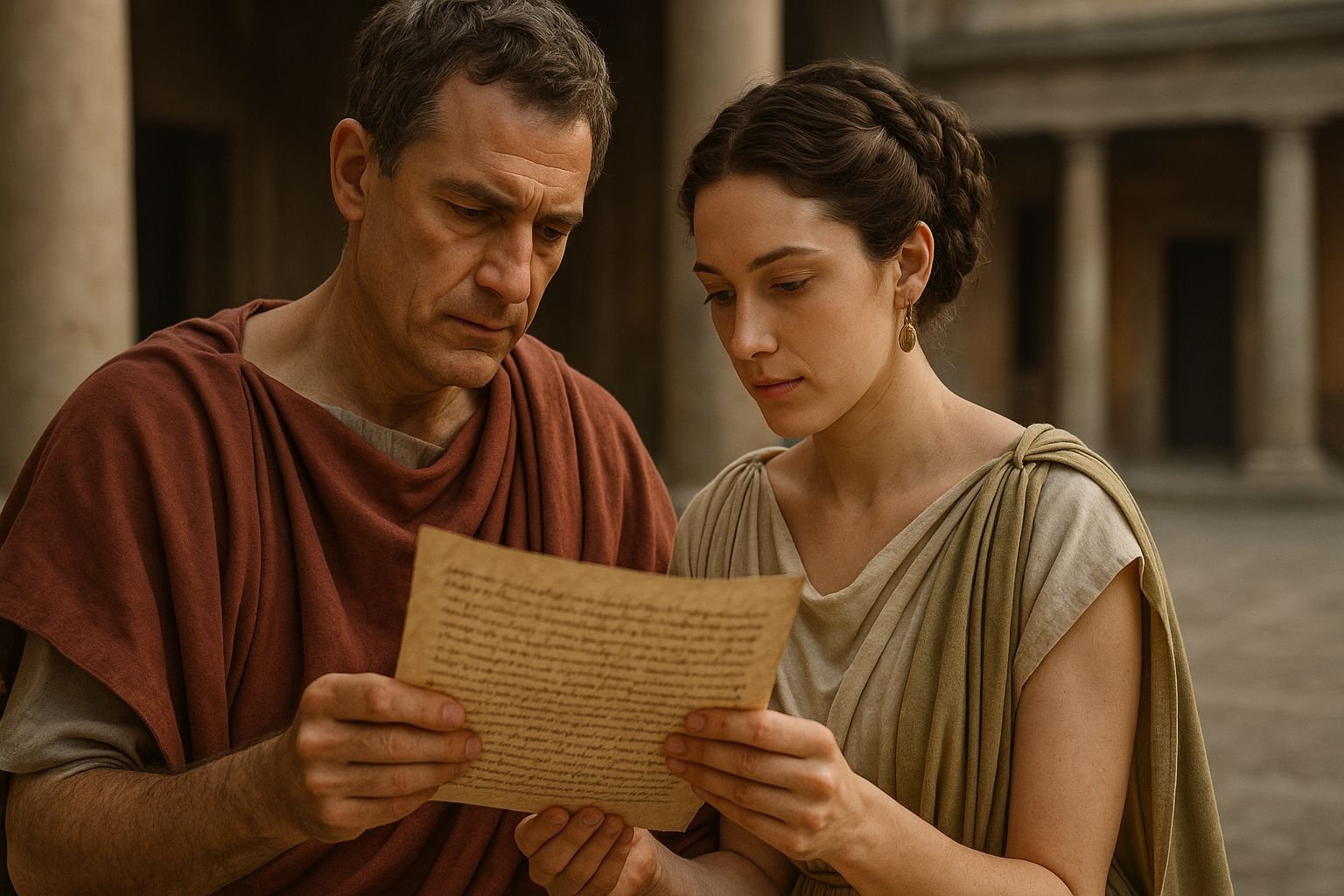
Letters between Roman couples reveal sophisticated communication practices that modern couples would do well to emulate. Historical records include exchanges between partners separated by distance that demonstrate thoughtful reflection, careful word choice, and consideration of the recipient’s perspective. Today’s instant messaging culture often lacks this intentionality, yet research consistently shows that quality communication correlates more strongly with relationship satisfaction than quantity.
Most importantly, Romans approached relationship communication as a skill to be cultivated rather than an innate ability. Seneca advised that “speech should be like a precious garment—valued not for its abundance but for its quality.” This wisdom applies perfectly to modern relationships where we often prioritize being understood over understanding, and speaking over listening.
The Art of Deliberate Conversation
Romans practiced what we might call “deliberate conversation”—thoughtful exchanges focused on understanding rather than merely expressing. Cicero’s writings on dialogue emphasize the importance of considering your audience (in this case, your partner) and tailoring communication to their needs and perspective. This principle aligns with modern communication research showing that effective communicators adapt their style to their partner’s needs rather than relying on a single approach.
For Roman elites, meaningful conversation was considered an art form requiring preparation and presence. They would often contemplate important topics before discussing them, gathering their thoughts rather than speaking impulsively. This practice of mental preparation before significant relationship conversations stands in stark contrast to our often reactive communication patterns today. Yet modern relationship experts increasingly recommend similar practices, such as “thinking time” before important discussions.
The Roman approach to deliberate conversation also included attention to timing. They recognized that important discussions required appropriate contexts—not when partners were tired, hungry, or preoccupied. Plutarch advised couples to choose “opportune moments” for significant conversations, understanding that even the most eloquent communication fails when poorly timed.
Why Romans Valued Listening Above Speaking
Perhaps surprisingly for a culture known for its oratory, Roman philosophers placed tremendous emphasis on listening. Epictetus famously noted that “nature gave us one tongue but two ears so that we may hear twice as much as we speak.” This wisdom acknowledges the essential but often overlooked role of listening in relationship communication.
Roman listening wasn’t passive but active and engaged. Seneca described good listening as “leaning in with the mind,” fully absorbing not just words but intentions and context. This practice of deep listening parallels what modern relationship therapists call “empathic listening”—hearing beyond words to understand underlying needs, fears, and desires.
Elite Romans were also taught to listen without immediately formulating responses—a practice that modern communication experts still recommend but find extremely difficult to teach. By creating mental space to truly absorb what was being communicated before crafting a response, Romans developed deeper understanding of their partners’ perspectives.
How to Use “Cooling Periods” During Arguments
Roman philosophers recognized the danger of communication during heightened emotional states. Seneca advised those feeling angry to “postpone everything while anger is upon you” and “come back to the issue when your mind is calm.” This ancient wisdom anticipated modern neuroscience research showing that our cognitive abilities literally diminish during emotional flooding, making productive communication nearly impossible.
The practice of intentional cooling periods during heated disagreements wasn’t viewed as avoidance but as wisdom. Romans understood that temporary distance often created space for reflection and perspective that proximity couldn’t provide. Modern couples can benefit from this ancient wisdom by establishing “pause protocols” during arguments—agreed-upon ways to create space when emotions intensify, with clear commitments to revisit issues once calm returns.
What’s particularly insightful about the Roman approach to cooling periods is that they weren’t simply about avoiding conflict but about ensuring conflicts were addressed with full cognitive capacity. Their goal wasn’t harmony at all costs but resolution through wisdom rather than emotion.
Letter-Writing Practices That Strengthen Modern Connections
The Roman practice of thoughtful letter writing offers a powerful counterpoint to our modern habit of hasty digital communication. Historical evidence shows that Roman partners separated by distance would craft carefully considered letters addressing not just practical matters but philosophical reflections, expressions of appreciation, and thoughtful responses to previous correspondence. These weren’t quick updates but substantive expressions of connection maintained across distance, similar to communication strategies for long-distance relationships today.
Modern couples can adapt this practice by occasionally replacing texts or quick calls with more substantial written communication—perhaps email, handwritten letters, or even audio messages created with intention rather than haste. Research confirms that these more deliberate forms of communication often create deeper connection than frequent but superficial exchanges.
Roman letter-writing also emphasized appreciation and affirmation. Even in challenging circumstances, partners would express gratitude and acknowledge each other’s qualities. This practice aligns perfectly with modern research showing that regular expressions of appreciation significantly predict relationship satisfaction and longevity.
Balance Individual Growth With Partnership
Perhaps one of the most surprising aspects of Roman relationship philosophy was its emphasis on balancing individual development with partnership growth. While Romans certainly valued commitment and loyalty, they didn’t view healthy relationships as requiring complete merging of identities. Instead, they understood that the strongest connections emerged when two people maintained their individual virtues while building something meaningful together. This balanced approach challenges both extreme individualism and codependency that can characterize modern relationships, offering instead a middle path focused on mutual growth and support.

The Roman Concept of “Otium” (Leisure) in Relationships
Otium represented quality leisure time dedicated to personal enrichment and contemplation—a concept that applied directly to relationship well-being. Elite Romans recognized that meaningful connection required dedicated time free from obligations and distractions. Unlike our modern tendency to fill every moment with productivity or entertainment, otium involved intentional presence and engagement with one’s partner.
Roman writers emphasized the importance of creating regular periods of otium within relationships—time specifically dedicated to conversation, shared learning, or simply being present together. These weren’t elaborate date nights but rather intentional periods for nurturing connection through quality attention. Modern research consistently confirms what Romans intuited: that regular, uninterrupted time together correlates strongly with relationship satisfaction and intimacy.
What makes the Roman concept of otium particularly valuable for modern couples is its focus on quality over quantity. In our hyperconnected world where partners might technically spend hours “together” while engaging with separate devices, the Roman emphasis on full presence offers a powerful corrective. Their understanding that deep connection requires undivided attention anticipates contemporary concerns about how technology impacts relationship quality.
Why Separate Friendships Strengthened Roman Marriages
Roman society placed high value on friendships outside of primary partnerships, understanding that no single relationship could meet all human needs for connection. Historical evidence shows that Roman couples maintained separate friendship circles that contributed to rather than detracted from their primary relationships. This perspective offers valuable wisdom for modern couples who sometimes expect their romantic partnerships to fulfill every social and emotional need—an expectation that creates unhealthy pressure.
Seneca advised that diverse connections enrich rather than threaten primary partnerships, writing that “the wise person needs friendship not like other things which we cannot do without, but like things we can do without yet are much more valuable with.” This balanced approach recognized that while a primary partnership might be central, it shouldn’t be all-consuming. Contemporary relationship research confirms this wisdom, showing that couples who maintain healthy individual friendships often report greater relationship satisfaction.
The Roman approach to separate friendships also recognized different needs for connection and growth. They understood that individual friendships often nurtured aspects of character or interests that primary partnerships might not fully engage. For modern couples, this wisdom suggests the importance of supporting each other’s separate connections rather than viewing them as threats or competitors for limited time and attention.
Finding Your Shared Purpose
While Romans valued individual development, they also understood the importance of shared purpose within partnerships. Cicero wrote extensively about relationships united by common virtue and goals, suggesting that the strongest connections emerge when partners align around meaningful purposes beyond the relationship itself. This principle offers valuable guidance for modern couples seeking deeper connection through shared values and objectives.
Roman partnerships often centered around shared commitments to family, civic responsibility, or philosophical growth. These common purposes created bonds that transcended changing circumstances or emotions. Modern couples can apply this wisdom by identifying and nurturing shared values and objectives—whether related to family, community involvement, spiritual growth, or other meaningful pursuits.
What’s particularly insightful about the Roman approach to shared purpose is that it wasn’t primarily about shared activities or interests but about shared virtues and values. They understood that while common hobbies might create temporary connection, alignment around deeper principles creates enduring bonds. This wisdom is confirmed by contemporary research showing that couples with shared values report greater relationship satisfaction and resilience during challenges.
5 Roman Conflict Resolution Techniques
Conflict is inevitable in any relationship, but how couples navigate disagreement often determines whether their bond strengthens or weakens. Roman philosophers developed sophisticated approaches to conflict resolution that balance assertiveness with respect. Their methods weren’t focused on avoiding disagreement but on handling it productively—an approach modern relationship psychology confirms is essential for healthy partnerships.
What makes Roman conflict resolution particularly valuable is its emphasis on maintaining dignity throughout disagreements. Unlike approaches that prioritize “winning” arguments, Roman methods focused on finding truth and preserving relationship harmony. This perspective aligns with contemporary research showing that how couples argue matters more than how often they disagree.
The following five techniques drawn from Roman philosophical writings offer practical approaches to addressing relationship conflict with wisdom rather than reactivity. While developed in a different era, these principles address human dynamics that remain remarkably consistent across time. For additional guidance, consider exploring relationship challenges neurodiverse partners face.
1. The Calm Counter-Argument Method
Romans developed a structured approach to disagreement that prioritized calm reasoning over emotional reactions. When faced with a partner’s perspective they disagreed with, Roman philosophers recommended first acknowledging the viewpoint before offering a counter-perspective. This technique—acknowledging before disagreeing—creates psychological safety that makes productive dialogue possible.
Seneca advised that when disagreeing, one should “yield to reason” rather than emotion. This didn’t mean suppressing feelings but rather ensuring that emotional reactions didn’t override rational consideration. The approach mirrors modern therapeutic techniques that encourage acknowledging emotions while not being governed by them during conflict.
Modern couples can apply this Roman wisdom by practicing the pause-acknowledge-respond sequence during disagreements. By pausing to truly hear a partner’s perspective, acknowledging its validity from their viewpoint, and then calmly offering an alternative perspective, couples create space for productive dialogue rather than defensive reactions.
2. Seeking Consilium (Advice) From Trusted Outsiders
Romans regularly sought consilium (advice or counsel) from trusted third parties during relationship challenges. Rather than viewing outside perspective as interference, they recognized that objective viewpoints often reveal blind spots and possibilities that partners locked in conflict cannot see. This practice anticipated modern approaches to couples therapy and relationship coaching by thousands of years.
What distinguished Roman consilium from mere venting or gossip was its purposeful nature. They sought wisdom specifically from individuals known for good judgment and virtue, not simply sympathetic allies who would take their side. This principled approach to outside counsel offers valuable guidance for modern couples determining when and how to involve others in relationship challenges.
The Roman practice of consilium reminds modern couples that seeking help isn’t a sign of relationship weakness but of wisdom. By carefully selecting sources of counsel known for balanced perspective rather than bias, partners can gain insights that help resolve seemingly intractable conflicts.
3. Creating Mutual Dignity in Disagreements
Perhaps the most profound aspect of Roman conflict resolution was its emphasis on maintaining dignitas (dignity and respect) even during heated disagreements. Cicero emphasized that disagreement should never descend into personal attacks or humiliation—advice that precisely mirrors Dr. John Gottman’s modern research identifying contempt as the most destructive force in relationships.
Romans practiced specific linguistic techniques to maintain dignity during conflict, including using “I” statements rather than accusatory “you” statements—a practice modern relationship therapists still recommend. They also avoided absolute language like “always” and “never,” recognizing that such generalizations rarely reflect reality and often escalate tension.
For modern couples, the Roman emphasis on dignity during conflict offers a powerful reminder that how we disagree often matters more than what we disagree about. By committing to language and approaches that preserve mutual respect, partners can address differences without damaging their fundamental connection.
4. Finding Middle Ground Through Compromise
Roman political philosophy emphasized the value of compromise in maintaining social harmony—a principle they applied to personal relationships as well. Unlike all-or-nothing approaches to conflict, Romans sought middle positions that honored core concerns from both perspectives. This balanced approach recognizes that most disagreements contain valid points on both sides.
What distinguishes the Roman approach to compromise from mere capitulation is its focus on principles rather than positions. They sought solutions that preserved the essential values and concerns of both parties, even when specific preferences couldn’t be fully accommodated. This sophisticated approach to finding middle ground offers valuable guidance for modern couples navigating complex disagreements.
Modern relationship research confirms what Romans understood intuitively: that willingness to compromise consistently predicts relationship satisfaction and longevity. By focusing on underlying needs and values rather than surface positions, couples can discover creative solutions that honor both partners’ essential concerns.
5. The Final Decision Protocol
For situations where compromise proved impossible, Romans developed clear protocols for making final decisions while preserving relationship harmony. Rather than allowing unresolved issues to create ongoing tension, they established frameworks for moving forward even without perfect agreement. This pragmatic approach recognizes that some differences may not be fully resolvable but needn’t derail the entire relationship.
Roman decision protocols typically involved clearly defined areas of authority based on expertise or stake in the outcome. Partners might defer to each other in different domains based on knowledge, experience, or degree of impact. This domain-specific approach to decision-making offers a more nuanced alternative to rigid power structures or perpetual stalemates.
For modern couples, the Roman final decision protocol suggests the value of establishing clear processes for handling persistent disagreements. By determining in advance how decisions will be made when consensus isn’t possible, partners can navigate differences without becoming permanently stuck or engaging in power struggles that damage connection.
Surviving Hard Times: Stoic Wisdom for Couples

Perhaps the most valuable relationship wisdom from ancient Rome comes from Stoic philosophy, which offers powerful guidance for navigating life’s inevitable challenges together. Roman Stoics developed practical approaches to hardship that build resilience rather than resentment—wisdom particularly relevant for modern couples facing uncertain times.
Unlike philosophies that promised escape from difficulty, Stoicism offered practical tools for finding strength and meaning within challenges. This realistic approach to hardship provides modern couples with strategies for navigating financial setbacks, health challenges, loss, and other inevitable relationship stressors without allowing them to erode connection.
What makes Stoic wisdom particularly valuable for relationships is its emphasis on responding rather than reacting. By developing intentional approaches to difficulty, couples can transform potential breaking points into opportunities for deeper connection and growth.
Focus on What You Can Control
The cornerstone of Stoic philosophy is the distinction between what we can and cannot control. Epictetus famously advised focusing energy exclusively on what lies within our power while accepting with equanimity what does not. For relationships, this wisdom offers a powerful framework for addressing challenges without becoming overwhelmed or misdirecting energy.
Roman Stoics recognized that many relationship stressors—from external circumstances like financial challenges to a partner’s thoughts and feelings—lie beyond our direct control. Rather than attempting to control these uncontrollable elements, they advised focusing on our own responses, attitudes, and virtues. This shift in focus from external circumstances to internal responses builds resilience rather than resentment.
Modern couples can apply this ancient wisdom by distinguishing between controllable and uncontrollable aspects of relationship challenges. By redirecting energy from attempting to change uncontrollable circumstances (or partners) toward managing their own responses effectively, couples develop agency within difficulty rather than becoming victims of it.
Find Meaning in Hardship Together
Roman Stoics viewed difficulties not as meaningless suffering but as opportunities for developing virtue and wisdom. Marcus Aurelius wrote that “the impediment to action advances action; what stands in the way becomes the way.” This perspective transforms relationship challenges from mere obstacles into potential pathways for growth and deeper connection.
Practicing Gratitude During Challenges
Even during Rome’s most difficult periods, Stoic philosophers emphasized the practice of gratitude as essential for psychological wellbeing. Seneca advised regularly reflecting on what might be lost to appreciate what remains—a practice that research now confirms significantly impacts relationship satisfaction. Modern couples facing challenges can strengthen their connection by implementing daily gratitude practices, specifically acknowledging what they appreciate about each other and their shared life even amid difficulties.
Apply These Roman Principles Starting Today
The wisdom of ancient Rome offers more than historical curiosity—it provides practical guidance for creating deeper, more resilient relationships in our modern world. By incorporating these time-tested principles of character development, communication, conflict resolution, and resilience, couples can build connections that not only withstand challenges but actually strengthen through them. At Timeless Love Academy, we believe that while relationship contexts evolve across cultures and eras, the fundamentals of human connection remain remarkably consistent.
Frequently Asked Questions
After sharing these Roman relationship principles with thousands of modern couples, certain questions consistently arise. The following responses address the most common inquiries about applying ancient wisdom to contemporary relationships. While these principles have proven remarkably effective across diverse relationships, understanding their historical context and appropriate adaptation helps couples apply them most effectively.
As with any relationship approach, these Roman principles should be adapted thoughtfully to individual circumstances rather than applied rigidly. The goal isn’t to recreate Roman relationships but to extract timeless wisdom that enhances modern connections while leaving problematic elements firmly in the past.
Did Romans actually have happy marriages or is this romanticized history?
“The happiness of your life depends upon the quality of your thoughts.”
— Marcus AureliusRoman marriages spanned the spectrum from deeply fulfilling to merely functional, much like relationships in any era. While elite literary sources tend to emphasize philosophical ideals rather than lived realities, archaeological evidence including letters, funerary inscriptions, and household artifacts suggests many Romans achieved genuine connection and contentment within their partnerships. For those interested in modern relationship dynamics, exploring relationship challenges neurodiverse partners face can provide valuable insights.
It’s crucial to acknowledge that Roman society maintained deeply problematic gender inequalities that limited relationship potential by modern standards. Marriage was primarily an economic and social institution rather than a romantic one, particularly among the elite. Wives typically had fewer rights and freedoms than husbands, though women of the upper classes often exercised considerable practical influence within the household. For a deeper understanding of how these dynamics compare to modern relationships, you might explore insights from Shakespeare’s famous mercy speech and its relevance today.
The philosophical principles discussed in this article represent ideals articulated by Rome’s most thoughtful minds rather than universal practice. Just as modern relationship research describes optimal patterns that many couples aspire to but don’t consistently achieve, Roman philosophical writings offered guidance that some—but certainly not all—relationships embodied.
What makes these principles valuable isn’t their historical implementation but their alignment with both timeless human needs and contemporary relationship research. The wisdom itself transcends its imperfect historical context.
How did Roman relationship advice differ for men and women?
Roman relationship guidance was undeniably gendered, reflecting the patriarchal structure of their society. Men received advice focused on exercising authority with wisdom and restraint, while women were counseled primarily on supporting their husbands and managing households effectively. This asymmetrical guidance reflected and reinforced unequal power dynamics that modern relationships rightly reject.
However, the core philosophical principles—particularly Stoic teachings about virtue, communication, and resilience—were considered universally applicable despite their uneven implementation. Writings from Seneca, Musonius Rufus, and other philosophers occasionally acknowledged women’s capacity for the same virtues expected of men, even while accepting social structures that limited women’s autonomy. This tension between philosophical universality and social inequality creates both challenges and opportunities for modern application.
Can these principles work in non-romantic relationships too?
The Roman principles outlined in this article apply remarkably well to all significant relationships, not just romantic partnerships. The emphasis on character development, intentional communication, conflict resolution, and resilience during challenges provides valuable guidance for family relationships, deep friendships, and even professional connections. In fact, Roman philosophers often addressed these principles primarily in the context of friendship and civic relationships, considering them fundamental to all meaningful human connections.
What Roman relationship practices should modern couples avoid?
While Roman relationship philosophy offers timeless wisdom, certain aspects of their relationship practices should remain firmly in the past. Modern couples should avoid practices that could lead to significant issues, such as the impact of an affair on marriage.
- Hierarchical power structures that placed men as unquestioned authorities
- Expectations that defined rigid gender roles regardless of individual aptitudes and preferences
- The view of marriage primarily as an economic and political alliance rather than a partnership of equals
- Limited autonomy for women in making relationship decisions
- Expectations of complete self-sufficiency that might discourage seeking professional help when needed
The value in studying Roman relationship wisdom comes not from uncritically adopting their practices but from extracting principles that align with both timeless human needs and contemporary understandings of healthy relationships. By separating philosophical wisdom from cultural limitations, modern couples can benefit from ancient insights while maintaining commitments to equality and mutual respect.
This selective approach allows us to appreciate Roman contributions to relationship understanding while acknowledging the significant advances in relationship equality and psychology that have occurred in the intervening millennia.
How do these Roman principles compare to relationship advice from other ancient cultures?
Roman relationship philosophy shares significant overlap with other ancient wisdom traditions while maintaining distinctive emphases. Like Confucian teachings, Roman philosophy emphasized virtue and appropriate roles, though with different specific virtues. Like ancient Greek philosophy (from which it drew heavily), Roman thought valued balance and moderation in relationships. And like Buddhist approaches, Stoic wisdom recognized the importance of managing internal responses to external circumstances.
What distinguishes Roman relationship wisdom is its particularly practical focus on character development as the foundation for connection. While other traditions certainly addressed character, Roman philosophy—especially Stoicism—provided specific daily practices for cultivating virtues that enhance relationships. This practical orientation makes Roman wisdom particularly accessible for modern application.
The most valuable approach may be integrating insights from multiple wisdom traditions, recognizing that different cultures identified complementary aspects of relationship success. By combining Roman emphasis on character with Eastern mindfulness practices and modern psychological research, couples can develop comprehensive approaches to relationship wellbeing that draw on humanity’s collective wisdom across cultures and eras. At Timeless Love Academy, we’re dedicated to helping couples discover and apply these timeless principles for deeper, more resilient relationships in today’s complex world.