
Key Takeaways
- The Michelangelo Phenomenon shows that partners can help each other achieve their ideal selves without forcing change, but through supportive affirmation.
- Research confirms that relationships thrive when partners focus on potential rather than problems, with couples who practice mutual affirmation reporting 40% higher satisfaction.
- Setting high aspirations together creates stronger bonds than settling for comfortable routines, which often leads to relationship stagnation.
- Daily affirmation practices like acknowledging growth efforts and creating space for authentic development significantly enhance relationship potential.
- Balance is crucial—supporting your partner’s growth isn’t about controlling their journey but recognising their unique path while building a shared vision.
In every relationship lies dormant potential waiting to be discovered. Like a masterful sculptor seeing what others cannot, you too can transform your partnership into something extraordinary.
Michelangelo’s Powerful Secret for Relationship Growth
When Michelangelo approached a block of marble, he didn’t see just stone—he saw possibility. “I saw the angel in the marble and carved until I set him free,” he reportedly said. This perspective wasn’t just artistic philosophy; it was a profound insight into human relationships that modern psychology now confirms can transform how we connect with our partners.
What if, instead of focusing on your partner’s flaws or trying to change them, you could see the magnificent “angel” of their potential self already existing within them? This shift in perspective forms the foundation of what researchers call the Michelangelo Phenomenon—a powerful dynamic where partners help “sculpt” each other into their ideal selves not through force, but through vision and affirmation.
The “Angel in the Marble” Principle
The Michelangelo principle in relationships is deceptively simple yet revolutionary. Rather than approaching your relationship with a fix-it mentality, you instead recognise that your partner already contains all the elements of their best self. Your role isn’t to change them but to help reveal what’s already there. For more insights, explore modern relationship advice inspired by ancient wisdom.

This perspective completely transforms how couples interact. When Sarah noticed her husband Michael had a natural talent for connecting with their children during difficult moments, she began pointing out this strength rather than focusing on his occasional impatience. “I see how naturally you defuse tension when our daughter is upset,” she told him. This affirmation—seeing and naming his inner “angel”—helped Michael recognise and develop this capacity further. For more insights, explore 400-year-old wisdom on improving couple interactions.
The principle works because it’s based on authentic potential, not manufactured expectations. You’re not creating something that doesn’t exist—you’re helping to reveal what’s already there but might be hidden under layers of doubt, habit, or societal expectations.
“The greatest danger for most of us is not that we aim too high and miss, but that we aim too low and reach it.” — This Michelangelo wisdom applies perfectly to relationships, where settling for comfortable mediocrity often feels safer than pursuing extraordinary connection.
How Seeing Potential Changes Everything
When partners begin seeing each other through the lens of potential rather than problems, relationships undergo remarkable transformations. This shift creates a positive feedback loop: affirmation leads to growth, which leads to greater confidence, which inspires more growth. For more insights, consider exploring modern relationship advice inspired by ancient wisdom.
Consider James and David, together for eight years and falling into comfortable patterns. They began deliberately highlighting each other’s strengths and dreams during weekly “vision walks.” David noticed James light up when discussing sustainable architecture, a passion he’d never pursued professionally. Instead of dismissing it as impractical, David began asking questions and sharing articles on the topic. Within six months, James enrolled in a sustainable design certificate program while maintaining his current career—something he’d never have done without his partner seeing and affirming this potential.
What makes this approach so powerful is that it works with your partner’s authentic self rather than against it. You’re not creating artificial expectations but rather creating conditions where natural growth can occur. This approach feels supportive rather than demanding because it’s aligned with who your partner truly is and wants to become.
Why Most Couples Aim Too Low
Many relationships settle into comfortable patterns where partners stop challenging each other to grow. The daily routines of life—work, chores, child-rearing, social obligations—can create a hypnotic rhythm that lulls couples into believing their relationship is “good enough.” This contentment with mediocrity might feel safe, but it’s actually relationship quicksand.
Research from the Gottman Institute shows that couples who maintain what psychologists call “positive illusions”—seeing their partners somewhat more positively than objective reality might suggest—actually report higher relationship satisfaction over time. These aren’t delusions but rather a focus on potential over limitations. By contrast, relationships where partners have stopped seeing possibility in each other often report feeling “comfortable” but lacking vitality. For more insights, explore 400-year-old wisdom on relationships.

The Science Behind the Michelangelo Effect
The Michelangelo Phenomenon isn’t just poetic metaphor—it’s backed by robust psychological research. Studies pioneered by Dr. Caryl Rusbult and colleagues have demonstrated that when partners affirm each other’s ideal selves, both individual well-being and relationship quality significantly improve.
What Research Reveals About Partner Affirmation
Longitudinal studies tracking couples over time have found something remarkable: partners who consistently affirm each other’s best qualities and support growth toward ideal selves report 40% higher relationship satisfaction than those who don’t. These “sculptor” partners engage in both perceptual affirmation (seeing the potential) and behavioural affirmation (creating opportunities for growth).
The research also reveals that this dynamic works most effectively when it’s mutual. When both partners engage in this affirmation process, the relationship creates what psychologists call a “virtuous cycle” where growth and connection continuously reinforce each other. As one partner develops toward their ideal self, they often become better equipped to support their partner’s growth as well.
What makes these findings particularly compelling is their consistency across different types of relationships and cultural contexts. From newlyweds to couples married for decades, from Western to Eastern cultures, the pattern remains remarkably stable: seeing and supporting your partner’s highest potential creates relationship magic.
The Connection Between High Expectations and Relationship Satisfaction
Contrary to popular belief, research shows that having high expectations for your relationship doesn’t set you up for disappointment—it often leads to greater fulfilment. Dr. Donald Baucom’s research at the University of North Carolina found that people with the highest expectations for their relationships typically experienced the highest quality partnerships. The key distinction is between “high standards” and “impossible demands.” For more insights, explore the Michelangelo effect and how it can strengthen your bond.
High standards in the Michelangelo context mean believing in your partner’s capacity for growth, authenticity, and fulfilment. These expectations create a positive pressure that inspires rather than deflates. Couples who maintain these elevated yet realistic expectations report feeling more respected, understood, and motivated within their relationships. To learn more about how this phenomenon strengthens bonds, explore the Michelangelo Effect.
The research highlights how expectations function as relationship self-fulfilling prophecies. When you consistently view your partner through the lens of their highest potential, you naturally create conditions that support that growth, and they often rise to meet the vision you hold.
Why Problem-Focused Relationships Often Fail
Many couples fall into a pattern that relationship experts call “problem-focus,” where interactions primarily revolve around fixing what’s wrong rather than building what’s right. This approach creates a relationship atmosphere dominated by criticism, defensiveness, and eventually emotional withdrawal. Over time, this pattern erodes the very foundation needed for growth and intimacy.

The alternative isn’t ignoring genuine issues but addressing them within a broader context of growth and possibility. Researcher Dr. Sandra Murray found that couples who maintain a “transformation perspective”—seeing challenges as opportunities to evolve together rather than threats to stability—navigate conflicts more successfully and maintain higher relationship satisfaction over time.
5 Signs You’re Not Aiming High Enough in Your Relationship
Most couples don’t realise they’ve settled for less than their relationship’s full potential. These five warning signs can help you recognise if you’ve been sculpting with too timid a chisel in your partnership.
1. You’ve Stopped Growing Together
When was the last time you and your partner tackled something challenging together that pushed you both to grow? If you can’t remember, or if growth happens individually but not as a couple, you’ve likely settled into a pattern of relationship complacency. Healthy partnerships continuously evolve, with partners encouraging each other to expand comfort zones and develop new aspects of themselves. For more insights on how to strengthen your bond, consider exploring mindfulness and meditation programs.
Growth doesn’t always mean dramatic changes like career shifts or relocations. It might appear as developing emotional intelligence together, exploring new intellectual interests, or deepening your capacity for intimacy. The key indicator is whether you feel a sense of movement and evolution in your connection or if it feels static and unchanging. For more insights on how ancient wisdom can influence modern relationships, explore 400-year-old wisdom reveals couples’ relationship insights.
2. You Focus More on Flaws Than Potential
Pay attention to the ratio of critique versus appreciation in your daily interactions. If you find yourself frequently focusing on what your partner does wrong rather than their strengths and possibilities, you’ve fallen into the flaw-fixation trap. This pattern becomes particularly evident during disagreements, when the tendency to bring up past mistakes or character flaws overpowers discussion of solutions and growth.
3. Your Conversations Stay Surface-Level
Relationship depth correlates strongly with the depth of your regular conversations. Couples who’ve stopped aiming high often report that their discussions rarely venture beyond logistics, schedules, and immediate problems. If weeks pass without meaningful conversations about dreams, fears, insights, or personal growth, your relationship’s potential remains largely untapped.
Surface-level communication creates what therapists call “intimate strangers”—couples who share living spaces and routines but have stopped sharing their inner worlds. This disconnection happens gradually, often masked by the busyness of daily life, but significantly limits how much you can help each other grow and evolve.
4. You’ve Settled Into Comfortable Routines
There’s nothing wrong with relationship stability, but when routines become rigid and unchanging, they can calcify a partnership. Look for signs like resistance to trying new experiences together, predictable conflicts that never evolve, or activities that have lost their meaning and become mere habits. These patterns indicate that comfort has replaced growth as your relationship’s primary value, limiting the emergence of new potential in both partners. To explore how to strengthen your bond, consider understanding the Michelangelo effect.
5. You Can Predict Everything About Each Other
One of the most insidious forms of relationship stagnation is believing you already know everything important about your partner. This assumption shuts down curiosity, leads to harmful mind-reading, and prevents you from witnessing your partner’s evolving self. If you frequently finish their sentences, assume their opinions without asking, or feel surprised when they occasionally reveal something new, you may have stopped truly seeing them—and by extension, stopped seeing their fullest potential.
How to See the “Angel” in Your Partner
Developing Michelangelo’s vision in your relationship isn’t about creating an idealised fantasy of your partner. It’s about learning to see what’s authentically possible within them—potential that already exists but might be hidden beneath layers of habit, fear, or societal expectations. This vision requires both depth of perception and a willingness to let go of limiting narratives you’ve constructed about who they are.
The first step is cultivating what psychologists call “appreciative inquiry”—the practice of looking for strength, capacity, and possibility rather than problems. This perspective shift doesn’t ignore challenges but approaches them with the understanding that your partner contains within them the resources needed for growth and transformation. Like Michelangelo seeing the finished sculpture within raw marble, you learn to see the fullest expression of your partner’s authentic self beneath current limitations.
Ask These 3 Questions to Discover Hidden Potential
To begin seeing your partner’s highest potential, start by exploring these revealing questions. When do you see your partner most alive, engaged, and authentic? What activities or situations bring out qualities in them that you deeply admire? These moments of alignment and flow often reveal core elements of their ideal self that might otherwise remain hidden in daily routines. For more insights, consider exploring modern relationship advice inspired by ancient wisdom.
Next, consider: What dreams or aspirations has your partner mentioned over the years that they’ve never fully pursued? Sometimes our deepest potential remains unexplored due to practical constraints, fear of failure, or simply the demands of daily life. These dormant aspirations often contain important clues about your partner’s authentic path. Finally, ask yourself: What strengths does your partner demonstrate that they don’t fully recognise in themselves? We often undervalue our natural talents precisely because they come easily to us, making a partner’s perspective invaluable in highlighting these gifts.
The Power of “Becoming” Conversations
Creating deliberate space for conversations about growth and possibility can transform your relationship’s trajectory. Unlike problem-solving discussions that focus on fixing what’s wrong, “becoming conversations” explore who you’re each evolving into and how you can support that journey. These dialogues might begin with questions like “What aspects of yourself would you like to develop more fully?” or “When do you feel most alive and authentic?” Approaching these conversations with genuine curiosity rather than with an agenda creates the psychological safety needed for vulnerable sharing.
Creating a Growth-Focused Relationship Environment
The environment you create together profoundly impacts how much potential unfolds in your relationship. Research shows that psychological safety—feeling accepted and supported even when taking risks or making mistakes—is the foundation for growth. Practice responding to your partner’s vulnerable shares and growth attempts with encouragement rather than criticism. Create regular rituals that celebrate progress, however small, and approach setbacks with compassion rather than judgment. When your relationship consistently feels like a secure base rather than a performance evaluation, both partners naturally move toward their highest potential. For further insights, explore how 400-year-old wisdom can reveal important relationship insights.
Practical Ways to Support Your Partner’s Highest Self
Seeing your partner’s potential is just the beginning—the Michelangelo effect truly works when vision translates into action. Supporting your partner’s growth isn’t about grand gestures but consistent, everyday behaviours that create an atmosphere where authenticity and development flourish. These practical approaches help you become an effective “sculptor” who helps reveal your partner’s best self.
Remember that effective support varies based on your partner’s unique needs and personality. Some thrive with verbal encouragement, while others respond better to practical assistance or simply having space to explore independently. The key is aligning your support with their authentic growth direction rather than imposing your vision of who they should become.
Daily Affirmation Practices That Actually Work
The most powerful relationship affirmations aren’t vague compliments but specific recognitions of your partner’s authentic strengths and growth efforts. Notice and verbalise when you see your partner taking steps toward their ideal self, even when those steps are small or imperfect. “I noticed how you really listened to your colleague’s perspective today—that patience and openness is something I’ve always admired about you” carries far more weight than generic praise.
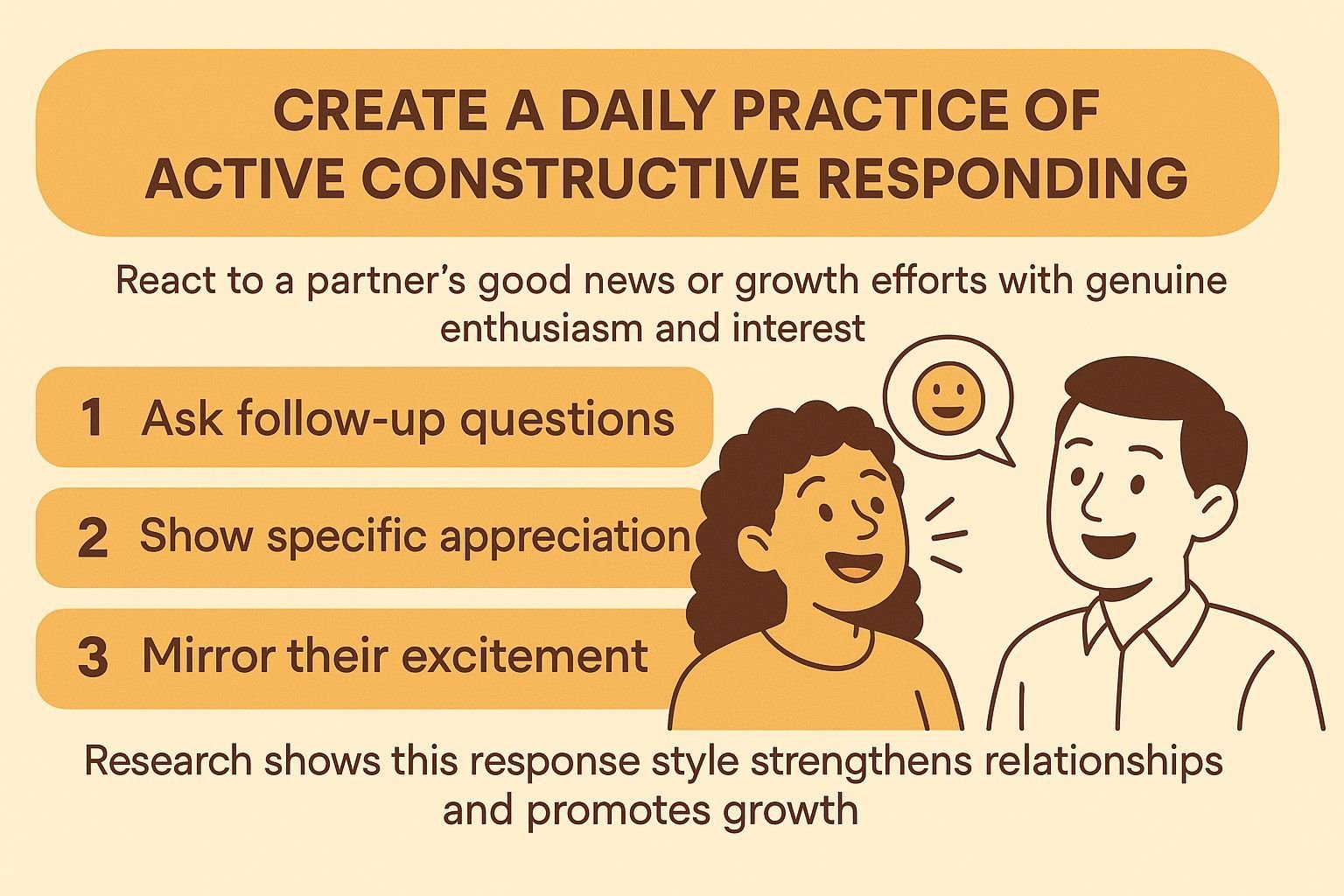
Create a daily practice of what researchers call “active constructive responding”—reacting to your partner’s good news or growth attempts with genuine enthusiasm and interest. This might look like asking follow-up questions when they share an accomplishment, expressing specific appreciation for qualities they demonstrated, or simply mirroring back their excitement. Studies show this response style significantly strengthens bonds and encourages continued growth.
Remember that effective affirmation speaks to who your partner is becoming, not just what they’ve accomplished. Phrases like “I see how much courage it took to try that, regardless of the outcome” affirm their character and process, not just results. This approach helps partners develop resilience and intrinsic motivation rather than performance-based self-worth.
When to Push vs. When to Accept
The art of supporting your partner’s growth involves knowing when to challenge and when to accept. Look for signs of readiness for challenge: when they express frustration with their current limitations, demonstrate consistent effort toward a goal, or directly ask for accountability. In these moments, gentle pushing—through questions, suggestions, or invitations to stretch beyond comfort zones—can catalyse meaningful growth. For those in neurodiverse relationships, here are some communication strategies that can help.
Equally important is recognising when acceptance is what’s needed. When your partner faces significant external pressure, is processing emotional challenges, or is exploring what they truly want rather than performing for others, your unconditional acceptance creates the security from which authentic growth emerges. The wisdom lies in distinguishing between accepting your partner’s core self (always appropriate) and accepting self-limiting patterns that prevent their flourishing (which may require gentle challenge).
How to Respond When They Doubt Themselves
Self-doubt is often the greatest barrier to your partner realising their potential. When they express uncertainty about their capabilities or worth, avoid both dismissive reassurance (“You’ll be fine”) and problem-solving mode. Instead, validate their feelings while reflecting back the larger truth of who they are. “I hear how nervous you feel about this presentation, and that makes sense. I’ve also seen how deeply you understand this material and how naturally you explain complex ideas when you’re talking about something you care about.” For more insights, explore how the Michelangelo Effect can strengthen your bond.
Sometimes doubt indicates genuine misalignment rather than simple insecurity. If your partner consistently expresses doubt about a particular direction, explore together whether this path authentically reflects their values and strengths. The Michelangelo effect works when we affirm our partners’ authentic potential, not when we push them toward goals that don’t resonate with their deeper selves. For those seeking guidance, consider exploring professional counselling services to help navigate these challenges.
Building a Shared Vision That Excites Both of You
The most powerful relationships aren’t just two people supporting each other’s individual growth—they’re partnerships with a compelling shared vision. Take time to explicitly discuss and imagine your ideal future together, focusing on how you want to feel, what you want to create, and what impact you want to have, rather than just material goals. These conversations create what relationship researchers call “shared meaning,” a powerful predictor of long-term relationship satisfaction and resilience.

The Delicate Balance: Supporting Without Controlling
The line between supportive sculpting and controlling behaviour can sometimes blur, particularly when you deeply care about your partner’s well-being and growth. True Michelangelo-style support always honours autonomy—your partner must remain the primary author of their own development story. When support becomes directive or contingent on specific outcomes, it shifts from liberating to constraining, no matter how well-intentioned.
This balance requires constant self-awareness and regular reflection on your motivations. Are you supporting a direction that genuinely excites your partner, or one that aligns with your vision for them? Are you creating opportunities they can freely engage with or applying pressure to follow a particular path? The answers to these questions determine whether your influence expands or limits your partner’s authentic growth.
Recognising the Difference Between Potential and Projection
- Potential affirmation builds on existing strengths, interests, and values your partner has demonstrated
- Projection imposes your preferences, unresolved issues, or unfulfilled dreams onto your partner
- Potential support follows your partner’s lead and pace, while projection rushes or redirects
- Potential recognition remains flexible as your partner evolves, while projection rigidly holds to a fixed image
- Potential support feels freeing to receive, while projection feels burdensome or pressuring
Learning to distinguish between recognising potential and projecting your own desires requires honest self-reflection. Notice when your enthusiasm for your partner’s growth in a particular area exceeds theirs, or when you feel disproportionately disappointed by their choices. These emotional signals often indicate projection rather than authentic support.
Consider Mark and Elena’s situation. Mark consistently encouraged Elena to pursue leadership positions at work, viewing her interpersonal skills as perfect for management. While well-intentioned, his encouragement felt increasingly pressuring to Elena, whose true passion lay in specialised technical work. Mark’s “support” actually reflected his own value on status and influence rather than Elena’s authentic path. Only when he recognised this projection could he genuinely support her depth-oriented career goals.
Projection often stems from our best intentions—we want our partners to be happy and fulfilled, and we believe our perspective might help them achieve that. The key distinction is whether we remain open to their definition of fulfilment differing from ours, and whether we can support their authentic path even when it doesn’t match our expectations. For more insights on supporting your partner’s journey, you might find mindfulness programs helpful.
True potential-affirming behaviour evolves as your partner grows and changes. What constituted support early in your relationship may differ significantly from what supports their growth now. Maintaining curiosity about who your partner is becoming, rather than holding to a fixed image of their potential, distinguishes genuine Michelangelo-style support.
How to Check If You’re Imposing Your Vision
Regular reflection can help ensure your support remains liberating rather than controlling. Ask yourself: Does my partner seem energised or drained after our growth-focused conversations? Do they share their doubts and setbacks with me, or hide struggles for fear of disappointing me? Would they pursue this direction if I weren’t in the picture? Your honest answers reveal whether you’re truly seeing their “angel in the marble” or imposing your own design. For more insights, consider exploring relationship insights inspired by historical wisdom.
Reflection Exercise: Write down five qualities or capabilities you believe represent your partner’s highest potential. For each one, note specific evidence you’ve seen that indicates this potential is authentically theirs—moments when they’ve demonstrated this capacity or expressed value for it. If you struggle to find concrete evidence for any quality, it might represent projection rather than potential.
Perhaps most importantly, directly ask your partner how your support feels to them. Create a safe space for honest feedback by emphasising that you want to support their authentic growth, not push your agenda. Questions like “When do my encouragements feel helpful versus pressuring?” or “Are there ways I could better support your development in areas that matter to you?” open crucial dialogue about the impact of your support efforts.
Remember that even well-intentioned support can sometimes miss the mark. If your partner indicates your encouragement feels misaligned with their authentic self, practice receiving this feedback with openness rather than defensiveness. This willingness to adjust your support approach demonstrates that you value their autonomy more than your vision for them.
Creating Space for Authentic Growth
Sometimes the most powerful way to support your partner’s development is by creating space rather than actively sculpting. This means cultivating patience with their growth timeline, accepting developmental detours that may not immediately make sense to you, and trusting their inner wisdom about their path. Research on patience in relationships shows that this approach—providing resources and encouragement while respecting self-determination—creates conditions where intrinsically motivated growth flourishes.
Practically, creating space might look like managing your own anxiety when your partner faces growth challenges, refraining from offering solutions unless requested, or simply maintaining confidence in their capacity to navigate their own journey. It might mean supporting exploration in directions you wouldn’t choose, or celebrating progress that looks different than you anticipated. This approach requires trust—both in your partner and in the natural unfolding of human potential when given supportive conditions.
Transform Your Relationship by Aiming Higher Together
The Michelangelo effect offers a profound alternative to both the “fixing” approach to relationships and the passive acceptance of limitations. By learning to see the “angel in the marble” of your partnership and consistently affirming each other’s highest potential, you create conditions where both individuals and the relationship itself naturally evolve toward greater fulfilment, connection, and impact. This growth-oriented approach transforms relationships from comfortable but static arrangements into dynamic partnerships characterised by mutual flourishing, shared purpose, and ever-deepening intimacy. Like Michelangelo’s timeless sculptures, these relationships stand as testimonies to what becomes possible when we see and support the highest in each other.
Frequently Asked Questions
As you begin implementing the Michelangelo approach in your relationship, you may encounter questions about how this principle works in practice. Here are answers to common questions that help clarify how to effectively support your partner’s growth while maintaining a healthy, balanced relationship.
What exactly did Michelangelo say about seeing potential?
While the exact wording varies in different sources, Michelangelo is credited with saying, “I saw the angel in the marble and carved until I set him free” and “Every block of stone has a statue inside it, and it is the task of the sculptor to discover it.” The core concept remains consistent: potential exists within the raw material, waiting to be revealed rather than imposed from outside. This idea resonates with Confucius’ wisdom on patience, which can have a transformative impact on both couples and individuals.
This philosophy extended beyond his artistic approach to reflect his broader worldview. He also famously stated, “The greater danger for most of us lies not in setting our aim too high and falling short, but in setting our aim too low and achieving our mark.” This perspective applies powerfully to relationships, suggesting that the real risk isn’t expecting too much from our partnerships but settling for less than the extraordinary connection possible when both partners support each other’s growth.
Can the Michelangelo effect work in struggling relationships?
Yes, but with important conditions. The Michelangelo effect can be transformative in relationships facing challenges, but it works best when fundamental trust and goodwill exist between partners. Before focusing on potential-affirming behaviours, struggling couples often need to address negative patterns like criticism, contempt, or emotional withdrawal. Once a foundation of safety and basic acceptance is established, beginning to see and affirm each other’s potential can help rebuild connection and create positive momentum. For relationships in significant distress, working with a trained relationship therapist provides the structured support needed to implement these principles effectively.
How do I know if I’m pushing my partner too hard versus supporting their growth?
The key difference lies in autonomy and emotional experience. Supportive encouragement respects your partner’s pace, values their perspective on their own development, and feels energising to receive. Pushing, by contrast, often involves expectations about timing, specific outcomes, or particular paths, and tends to feel pressuring or draining to your partner. For more insights, you might explore inclusive couples therapy options that focus on mutual growth and understanding.
Pay attention to feedback—both verbal and non-verbal. If your partner seems to withdraw when you offer “support,” changes the subject, becomes defensive, or shows signs of anxiety, you may have crossed the line from supportive to pushy. When in doubt, directly ask: “Does my encouragement in this area feel supportive to you, or does it sometimes feel like pressure? I want to support your growth in ways that feel good to you.” This conversation itself demonstrates respect for their autonomy and provides valuable guidance for adjusting your approach.
What if my partner doesn’t seem interested in growth or change?
Apparent resistance to growth often masks other issues: fear of failure, past experiences where change led to criticism, or simply different priorities about which aspects of life deserve development focus. Rather than labelling your partner as “not interested in growth,” explore what might be beneath this impression. Are they growing in areas you haven’t recognised? Are there specific barriers making growth feel unsafe? Is their current season of life requiring stability before new expansion becomes possible? This curiosity-based approach often reveals that growth resistance is actually about timing, direction, or emotional safety rather than a fixed anti-growth mindset. For more insights, consider exploring modern relationship advice inspired by ancient wisdom.
Is there scientific evidence that the Michelangelo phenomenon actually improves relationships?
Yes, substantial research supports the Michelangelo phenomenon’s positive impact on relationships. Dr. Caryl Rusbult’s pioneering studies demonstrated that partner affirmation predicted both relationship quality and individual well-being over time. Later research by Dr. Eli Finkel and colleagues showed that partners who helped each other move toward their ideal selves reported greater relationship satisfaction, commitment, and intimacy.
A particularly compelling 2009 study published in the Journal of Personality and Social Psychology followed couples for multiple years and found that partner affirmation predicted both relationship well-being and movement toward the ideal self over time. The effect remained significant even when controlling for general relationship positivity, suggesting that this growth-supporting dynamic contributes uniquely to relationship success.
Recent research has extended these findings across different relationship types and cultural contexts. A 2018 meta-analysis confirmed the robust connection between partner affirmation behaviors and relationship quality across studies. The evidence consistently shows that when partners help each other grow toward their authentic ideal selves, both the individuals and the relationship thrive.
- Regular check-ins about growth goals and support needs
- Celebrating small steps and progress rather than just outcomes
- Balancing challenge with acceptance based on current circumstances
- Creating relationship rituals that strengthen your growth-supporting dynamic
- Remembering that your own growth creates space for your partner’s development
By incorporating the Michelangelo principle into your relationship, you’re not just improving your connection today—you’re creating conditions for continuous evolution and deepening intimacy over time. Like the sculptor who patiently reveals the beauty within the stone, your consistent vision and support help uncover the extraordinary potential already present in your partner and your relationship.

Unlocking the hidden potential in your relationship can be transformative. By understanding and applying ancient wisdom, you can nurture a stronger bond with your partner. For instance, learning about modern relationship advice inspired by ancient Roman wisdom can provide valuable insights into maintaining a healthy and fulfilling relationship.